


AI Generated Summary
- Addressing the so-called Khalistan issue head-on in an interview, Luxon acknowledged the “huge amount of pain, loss, and suffering” it has caused in India while firmly declaring that it will not derail the growing partnership between the two nations.
- Describing pro-Khalistan protesters as “a very small number” that can be “counted on your fingertips,” she stressed that they “do not represent the views of the wider community, even the Sikh community here in New Zealand.
- This approach reflects a growing recognition that a vocal minority does not speak for the broader Sikh community in New Zealand—or indeed, the vast majority of Sikhs worldwide.
In an era where diaspora activism often tests bilateral relations, New Zealand Prime Minister Christopher Luxon’s recent remarks offer a refreshing model of pragmatic diplomacy. Addressing the so-called Khalistan issue head-on in an interview, Luxon acknowledged the “huge amount of pain, loss, and suffering” it has caused in India while firmly declaring that it will not derail the growing partnership between the two nations. “We won’t tolerate intimidation or violence,” he stated unequivocally. This balanced position—defending democratic freedoms while rejecting lawlessness—signals a welcome maturity that prioritizes substance over fringe noise.
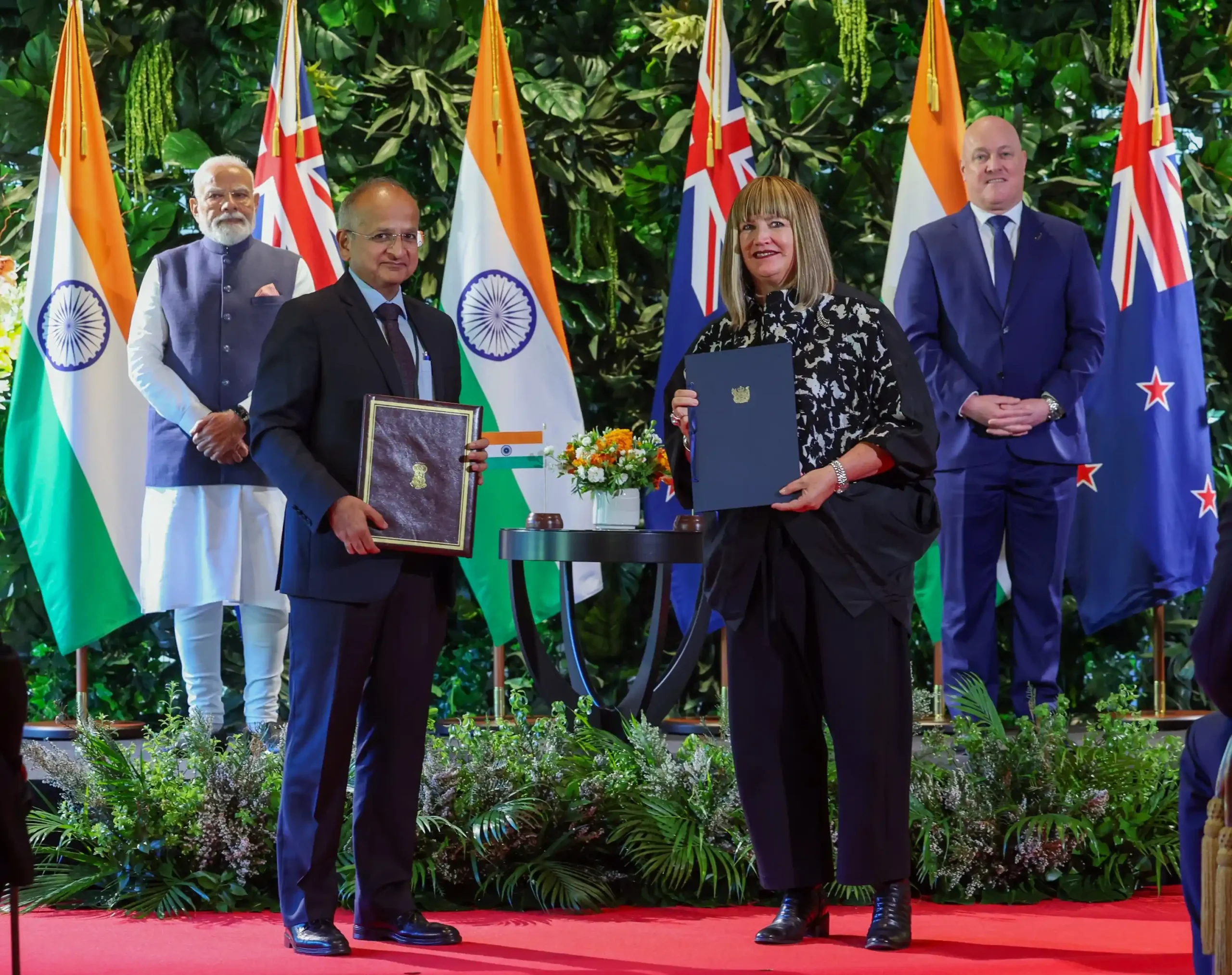
Luxon’s clarity comes at a pivotal moment. India and New Zealand are actively strengthening economic and strategic bonds. The landmark Free Trade Agreement signed earlier this year opens significant opportunities: New Zealand gains preferential access for key exports like forestry products, meat, wool, and horticultural goods, while India benefits from tariff reductions on its products. Bilateral trade, already expanding, stands to grow further as both countries navigate the Indo-Pacific’s complex geopolitics. PM Narendra Modi’s recent visit to New Zealand underscores this momentum, with discussions encompassing trade, security cooperation, and people-to-people ties.
Crucially, New Zealand’s leadership is distinguishing between peaceful expression and extremism. Luxon emphasized that while freedom of speech is cherished, threats, intimidation, or criminal behavior linked to Khalistan elements will face strict police action. Past protests in 2024 remained largely peaceful and within legal bounds, but any escalation will be met with enforcement. This approach reflects a growing recognition that a vocal minority does not speak for the broader Sikh community in New Zealand—or indeed, the vast majority of Sikhs worldwide.
New Zealand MP Parmjeet Parmar, herself of Indian origin, reinforced this reality. Describing pro-Khalistan protesters as “a very small number” that can be “counted on your fingertips,” she stressed that they “do not represent the views of the wider community, even the Sikh community here in New Zealand.” This insider perspective is vital. Sikh New Zealanders, like their counterparts in India, Canada, the UK, and elsewhere, are overwhelmingly integrated, entrepreneurial, and proud contributors to their adopted homes. They run successful businesses, participate in civic life, and maintain deep cultural and religious traditions without endorsing separatism. The extremists—often amplified by groups like Sikhs for Justice—represent a fringe that thrives on disruption rather than dialogue.
This dismissal of extremism as negligible is a positive development with broader implications. It prevents a small cohort of radicals from hijacking community narratives or poisoning international relations. Countries like Canada have learned the hard way how unchecked elements can strain ties; New Zealand appears determined to avoid that path. By focusing on law enforcement, intelligence sharing, and security assessments for events like hypothetical referendums, Wellington is sending a message: democratic space exists, but it has boundaries.
For India, this affirmation of sovereignty and territorial integrity is reassuring. Successive Indian governments have long maintained that Khalistan is a settled historical chapter, rooted in the tragic militancy of the 1980s that claimed thousands of innocent lives, including Sikhs. Today, Punjab thrives as an integral part of a vibrant, democratic India. The diaspora’s success abroad is a testament to India’s soft power, not a platform for revivalist fantasies.
Positive developments extend beyond rhetoric. Enhanced cooperation in trade, education, tourism, and technology promises mutual prosperity. The Indian community in New Zealand serves as a living bridge—doctors, engineers, students, and entrepreneurs fostering goodwill. Addressing security concerns collaboratively, including through intelligence exchanges, will only deepen trust.
Luxon’s government is striking the right chord: upholding liberal values without naivety. By marginalizing extremists and elevating the productive mainstream of the Sikh community, New Zealand is fostering an environment where genuine cultural exchange flourishes. As India and New Zealand chart a forward-looking partnership, this sensible approach ensures that fleeting controversies do not overshadow shared opportunities in a multipolar world.
The message is clear—extremism remains a fringe aberration, not a community sentiment. Mature democracies like New Zealand are choosing partnership and progress. That bodes well for the future.