
AI Generated Summary
- The province has been at the center of a contentious push for an October vote on whether to remain part of Canada or trigger a binding independence referendum.
- At the same time, Alberta is back in the headlines over renewed separatist controversy, with the province facing fresh debate around a potential independence referendum and the broader question of where political identity ends and instability begins.
- Why are children reportedly being bused in from cities an hour away to a facility in a village with virtually no local population tied to the institution’s stated cultural focus.
A story unfolding in Rockyford, Alberta, is not just about a vacant school finding new life. It is about transparency, public trust, and the quiet unease that emerges when decisions affecting small communities are made behind closed doors.
A village of just over 400 people has sold a long-shuttered school to an undisclosed buyer. The stated plan: a “cultural centre.” Beyond that, officials have offered little. Repeated requests for clarity have been met with a familiar refrain—“cannot comment further.” Even basic questions about ownership, purpose, and long-term use remain unanswered.
On paper, there is nothing objectionable about a cultural or religious centre. Canada prides itself on pluralism, and institutions that promote community, language, and faith are part of that fabric. But pluralism depends on openness, not opacity. When a municipality declines to disclose who is investing in its public assets, what exactly is being built, and how it will function, suspicion is not manufactured—it is invited.
The Rockyford case raises several legitimate questions. Why are children reportedly being bused in from cities an hour away to a facility in a village with virtually no local population tied to the institution’s stated cultural focus? Why was a public asset sold above asking price to an unnamed buyer whose plans remain vague? And why are even municipal employees reportedly reluctant to speak, citing fear of professional consequences?
These are not questions of identity or religion. They are questions of governance.
At the same time, Alberta is back in the headlines over renewed separatist controversy, with the province facing fresh debate around a potential independence referendum and the broader question of where political identity ends and instability begins. The province has been at the center of a contentious push for an October vote on whether to remain part of Canada or trigger a binding independence referendum. A court recently quashed a bid by Alberta separatists for an independence referendum, ruling that the provincial government must consult with First Nations before collecting signatures. Despite this, the Alberta government has filed an appeal, and Premier Danielle Smith has stated that the law will be enforced if civil disobedience erupts over the separation vote. While a majority of Albertans oppose independence, nearly a quarter support the province leaving Canada, underscoring the depth of the internal rift.
It is in this broader context of provincial instability that secrecy becomes especially problematic. When local authorities provide minimal information, they create a vacuum that gets filled with speculation—sometimes reasonable, sometimes not. Transparency is the only effective antidote.
Concerns have also been raised—though difficult to independently verify—about Khalistani separatist elements purchasing properties in remote Alberta villages and engaging in opaque real estate deals. While most members of the Sikh community have no connection to extremism and contribute positively to Canadian society, fringe activists have been accused of using religious or cultural institutions as platforms for political mobilization. Researchers have flagged foreign actors—from the U.S. to Russia—exploiting grievances in Alberta’s separatist debate as a threat to Canada’s democratic integrity.
Equally troubling are reports that some local residents feel hesitant to speak publicly about the development. Whether due to social pressure, fear of backlash, or simply uncertainty, this reluctance points to a deeper issue: a breakdown of confidence between citizens and decision-makers.
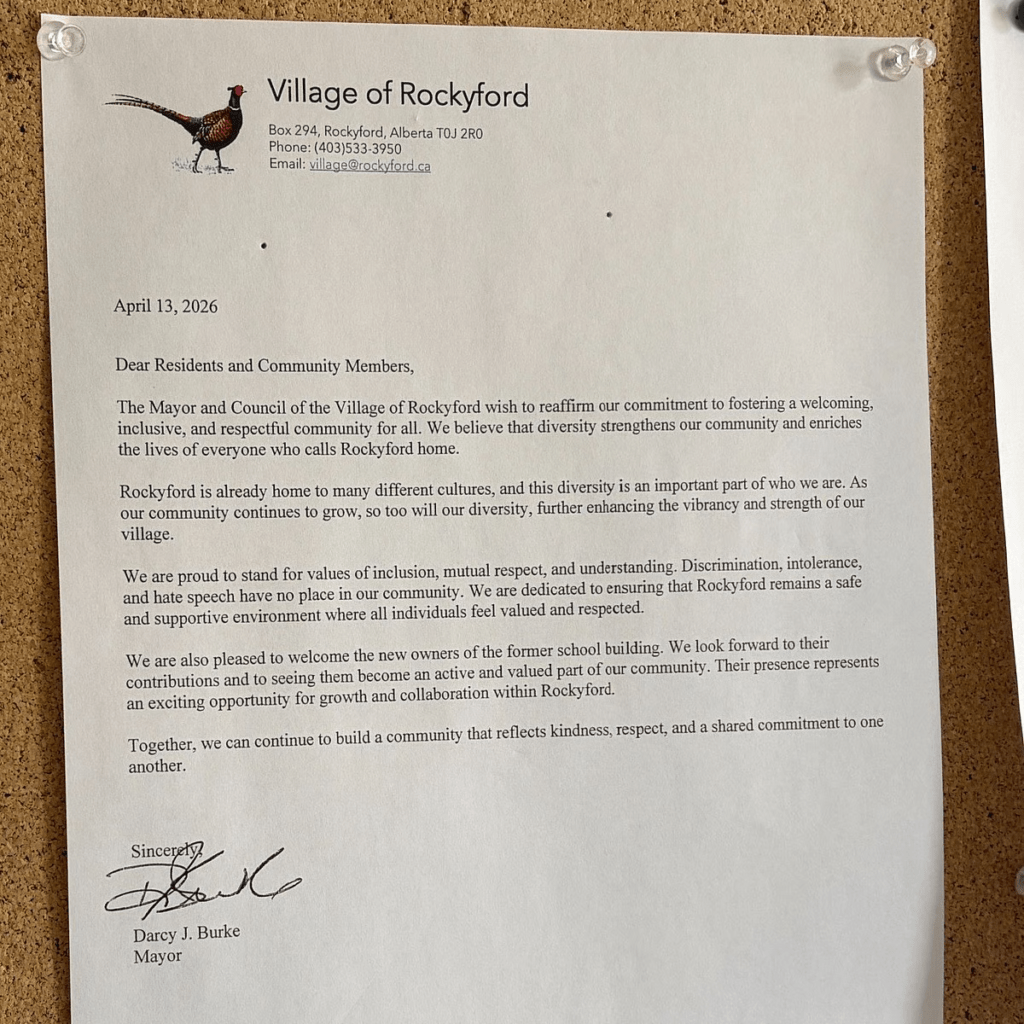
The mayor’s letter to residents emphasizes inclusivity and warns against “discrimination, intolerance, and hate speech.” Those are important principles. But they cannot be used, intentionally or otherwise, to shut down legitimate inquiry. Asking who is buying public land, what they intend to do with it, and how it will affect the community is not intolerance—it is civic responsibility.
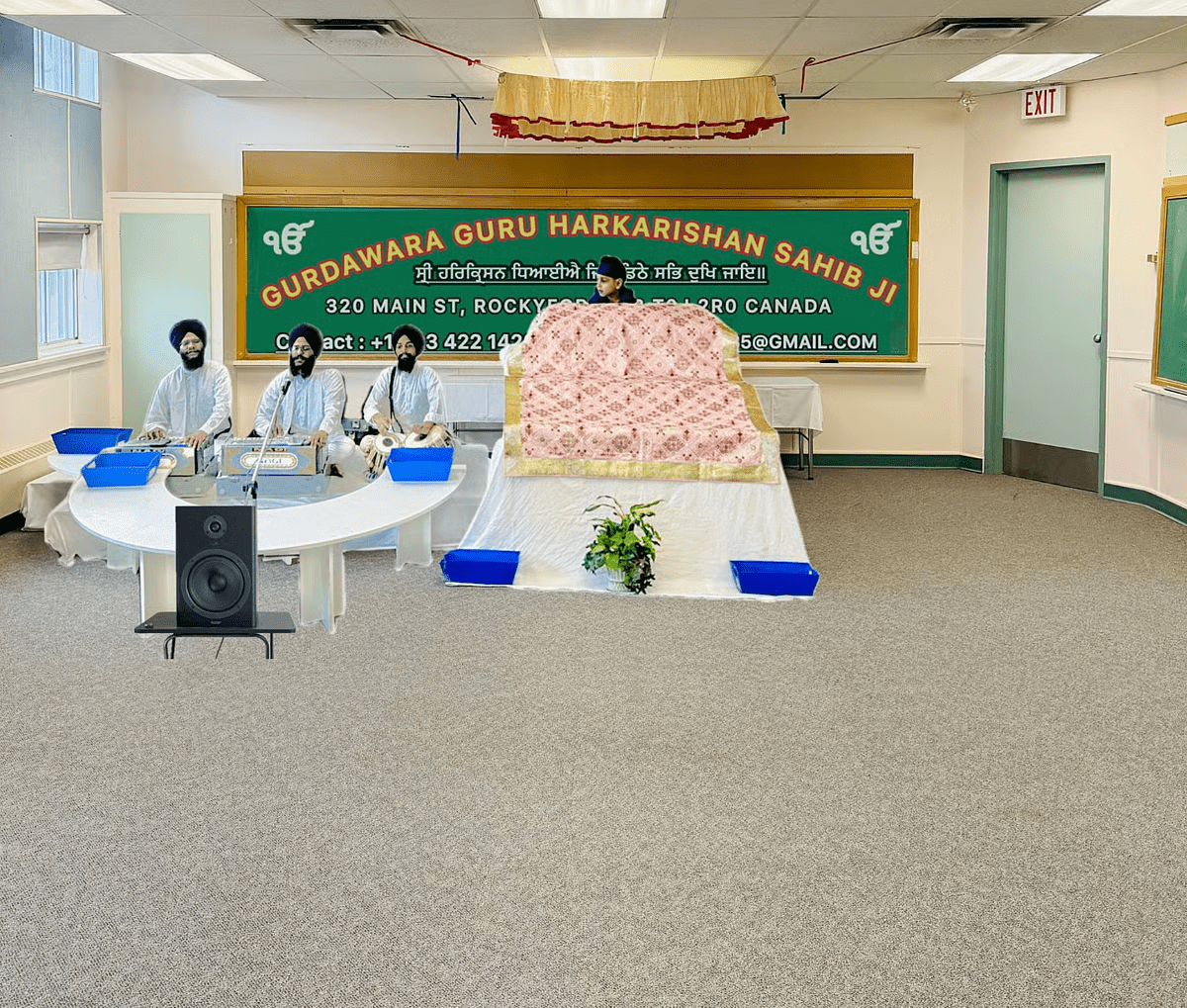
If the planned centre is indeed a place for cultural education, religious practice, and community service, then there should be no reason to obscure its details. In fact, openness would likely build goodwill, not resistance. A gurdwara, for example, typically includes a langar—a free community kitchen open to all—which is a powerful expression of service and inclusivity. Sharing such plans transparently could foster understanding rather than suspicion.
Instead, what Rockyford residents—and observers beyond—are left with is a puzzle: an anonymous buyer, a vague mandate, a potentially significant transformation of a public building, and a wall of silence from those in charge.
Small towns depend on trust. When that trust erodes, even well-intentioned projects can become sources of division.
The solution is straightforward. Disclose the ownership. Clarify the intended use. Engage openly with residents. Address concerns directly rather than deflecting them.
Because in a democracy, the real threat is not diversity or cultural expression—it is secrecy.