


AI Generated Summary
- On one side, some pro-Khalistan and hardline groups in Amritsar raise slogans of “Khalistan Zindabad,” wave Khalistani flags, and attempt to promote narratives around the vicinity of Sri Harmandir Sahib and related events that have the potential to disturb Punjab’s peace and social harmony.
- It is unfortunate that for the past four decades, certain extremist and political groups have used this pain not as a means for reconciliation and dialogue, but as a tool to advance their own agendas.
- The greatest damage caused by such activities is that they cast a shadow over the image of the Sikh community and create unnecessary tension in Hindu-Sikh relations.
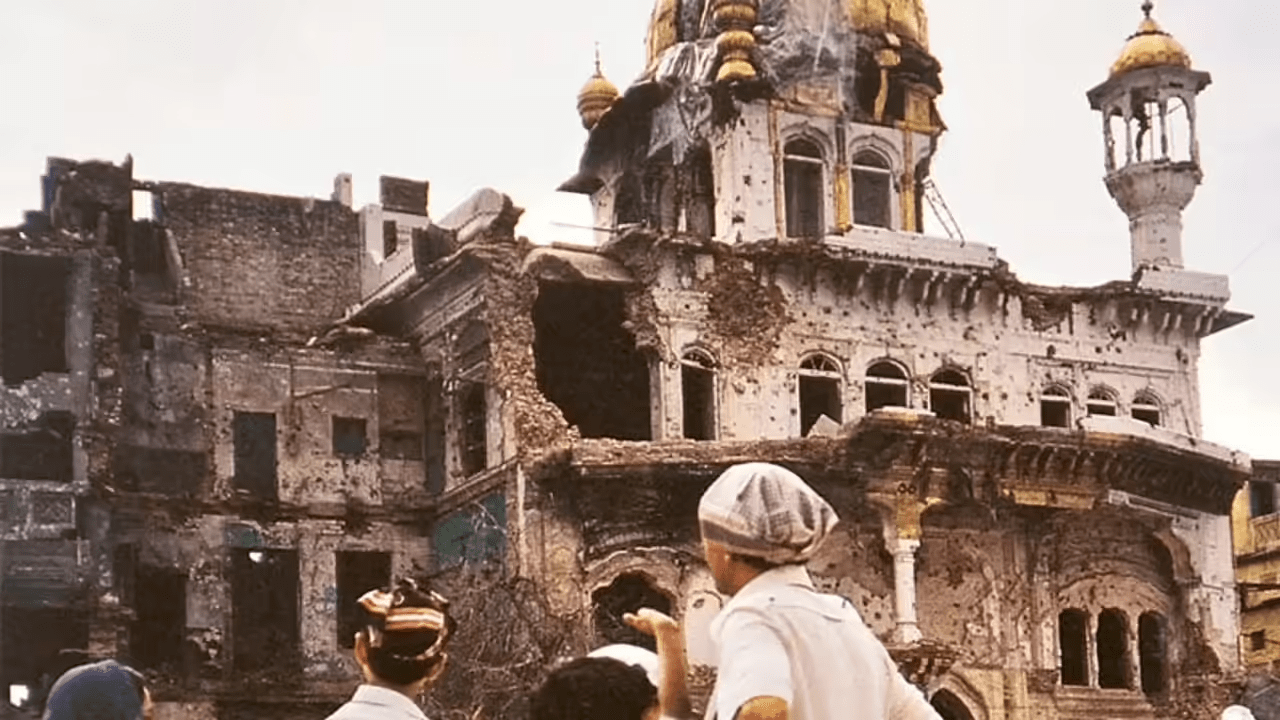
Every year, as the month of June arrives, Punjab once again finds itself in a tense atmosphere. The memories of Operation Blue Star and the events of 1984 naturally evoke pain and deep emotions within the Sikh community. However, it is unfortunate that for the past four decades, certain extremist and political groups have used this pain not as a means for reconciliation and dialogue, but as a tool to advance their own agendas.
On one side, some pro-Khalistan and hardline groups in Amritsar raise slogans of “Khalistan Zindabad,” wave Khalistani flags, and attempt to promote narratives around the vicinity of Sri Harmandir Sahib and related events that have the potential to disturb Punjab’s peace and social harmony. The greatest damage caused by such activities is that they cast a shadow over the image of the Sikh community and create unnecessary tension in Hindu-Sikh relations.
On the other side, certain Hindu organizations engage in reactionary politics by launching campaigns and displaying posters that portray former Punjab Police officials, political leaders of the era, or controversial figures associated with Operation Blue Star as “martyrs.” This is also an action that a large number of Sikhs find unacceptable. Thousands of Sikh families still remember the violence and suffering of the 1980s and 1990s with deep pain. Under such circumstances, glorifying individuals whose actions remain highly controversial within the Sikh community does not heal old wounds—it only reopens them.
The truth is that ordinary Hindus and ordinary Sikhs are the ones who suffer from the extremist rhetoric and symbolic politics practiced by both sides. The overwhelming majority of Punjabis neither support separatism nor the kind of politics that deliberately inflames the wounds of any community. Yet every year the same cycle repeats itself—one side raises provocative slogans, the other responds with equally provocative gestures, and the government and administration often remain passive spectators.
The most important question is this: if maintaining law and order is the responsibility of the state, why has no permanent solution been found to this recurring tension over the past 42 years? If pro-Khalistan slogans are considered a challenge to public order and the law, then appropriate action should be taken. Likewise, if posters, statements, or campaigns that provoke the sentiments of a community threaten social harmony, they too should be dealt with firmly and fairly. The law must be applied equally to all, not selectively according to political convenience.
Punjab’s identity is rooted in the teachings of Guru Nanak Dev Ji, in brotherhood, service, and a shared cultural heritage. This is the land where Hindus and Sikhs have stood together through joys and hardships for centuries. Today, the need is to strengthen this legacy, not to turn historical tragedies into political weapons for the present.
People may hold different opinions regarding the events of 1984, counter-terrorism operations, and the controversies associated with that period. However, in any democratic society, lasting peace cannot emerge from separatist slogans, nor from reactionary glorification. The path to peace lies in justice, dialogue, sensitivity, and the equal application of the law.
Punjab’s future cannot be left in the hands of those who seek to reopen old wounds every year and sow hatred in the minds of a new generation. The time has come for governments, religious leaders, and responsible sections of society to send a clear message: Punjab must not become a laboratory for separatist slogans, nor a platform for reactionary politics that weakens Hindu-Sikh unity.
Punjab needs peace, not confrontation; brotherhood, not division; and a future built on hope—not a future trapped in the flames of the past.