


AI Generated Summary
- In the smoky nightclubs of 1950s and ’60s Bombay, Calcutta, and Delhi, a turbaned Sikh with a commanding voice and electrifying dance moves brought rock ‘n’ roll to an India still finding its post-independence rhythm.
- After about 20 years, he left the Navy in 1969 to care for his ailing wife and family, later working in industry for decades, including as CEO of a workshop.
- ” A decorated Indian Navy officer by day and a pioneering rock performer by night, Sethi embodied a rare fusion of duty, identity, and unapologetic swagger.
In the smoky nightclubs of 1950s and ’60s Bombay, Calcutta, and Delhi, a turbaned Sikh with a commanding voice and electrifying dance moves brought rock ’n’ roll to an India still finding its post-independence rhythm. His name was Iqbal Singh Sethi, better known as the “Indian Elvis,” the “Sikh Elvis,” or “Elvis in a Turban.” A decorated Indian Navy officer by day and a pioneering rock performer by night, Sethi embodied a rare fusion of duty, identity, and unapologetic swagger.
Born on January 1, 1934, in Rawalpindi (then in undivided India, now Pakistan), Sethi grew up in a Sikh family steeped in service. His father, Gopal Singh Sethi, was a decorated JCO in the 2 Punjab Regiment who served in World War I. Tragedy struck early when Iqbal lost his mother at age six and was raised by his elder sister. After completing his SSC in Pune, he joined the Indian Navy in 1949 as a junior sailor and engine-room mechanic.
His naval career took him across iconic ships like INS Delhi (formerly HMS Achilles), INS Bombay, and INS Mysore. In 1953, a pivotal moment came during Queen Elizabeth II’s Royal Navy Review at Spithead, Portsmouth. While in England, Sethi discovered rock ’n’ roll and jive dancing. An English girlfriend, Sylvia Beckham, taught him the moves, and together they won competitions, including the South of England Rock ’n’ Roll Championship. He later earned the title “King of Rock ’n’ Roll of India” at a competition in Bombay’s Taj Hotel.
Back in India, Sethi honed his skills under early ballroom and Latin dance pioneers Sam and Ruby Aaron (parents of Salome Roy Kapur). He performed at legendary venues like Venice Nightclub, Trincas in Calcutta, and various hotels, blending Western energy with his unmistakable Sikh identity—turban, beard, and all. He never compromised on his faith, becoming one of the first Sikhs to perform rock ’n’ roll without altering his appearance.
The Bollywood Breakthrough
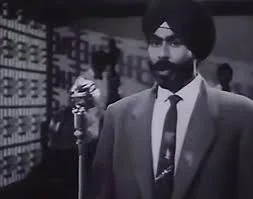
In 1960, music directors Shankar-Jaikishan spotted his talent and cast him in the Sunil Dutt–Waheeda Rehman starrer Ek Phool Char Kaante. Sethi performed the show-stopping number “Beautiful Baby of Broadway” (also known as “Bombshell Baby of Bombay,” tweaked for censors). Dressed sharply, mic in hand, and moving with pure Elvis-style flair, he made history as the first turbaned, bearded Sikh to appear prominently in a Bollywood song sequence. The performance introduced mainstream Indian audiences to rock ’n’ roll and challenged stereotypes about Sikh representation in cinema.
The song enjoyed a revival decades later when it featured in Salman Khan’s Tubelight (2017), delighting Sethi in his later years.
Duty Over Stardom
At the peak of his popularity, Sethi faced a stark choice: pursue a full-time film and music career or honor his naval commitment. The Navy reportedly gave him an ultimatum. He chose service to the nation. He participated in the 1961 Goa Liberation and the 1965 Indo-Pak War, earning medals including the Raksha Medal. After about 20 years, he left the Navy in 1969 to care for his ailing wife and family, later working in industry for decades, including as CEO of a workshop.
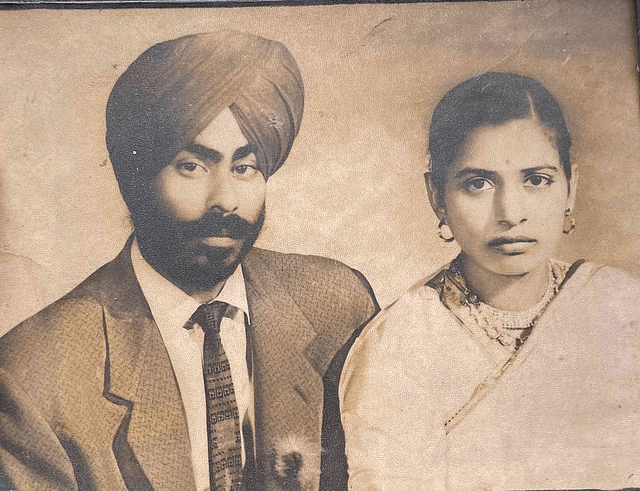
A devoted family man, he married a woman from Jalandhar chosen with his father’s guidance. They had three daughters and a son. Sethi was known for his discipline—ironing uniforms, cooking Sunday parathas, and helping others. A philanthropist, he supported his community, the local gurdwara, and even helped strangers start businesses. He lived by simple wisdom: “Be happy, enjoy yourself, never look back. If you look at the sky, you will fall down. If you look at the ground, you will always find yourself moving forward.”
A Life Well Lived
Even in his 80s, Sethi remained “fit like a rock,” rising early and staying independent. He took pride in opening doors for future Sikh artists in entertainment. Interviews, radio appearances, and renewed interest in his work brought him joy in later life.
Iqbal Singh Sethi passed away on November 27, 2021, at age 87. His family shared his story posthumously as a tribute. He left behind a legacy not just of music and medals, but of living authentically—balancing passion with responsibility, tradition with modernity, and service with joy.
In an era when rock ’n’ roll was exotic and cultural boundaries were rigid, Sethi danced across them with a red turban and a sailor’s heart. He proved that you could rock like Elvis while staying true to who you are. India’s first rock ’n’ roll star wasn’t just an imitation—he was an original.
