


AI Generated Summary
- His Everest expedition is now being viewed not just as a mountaineering feat, but as a testament to endurance, courage and the will to survive in the face of near-certain danger.
- Favourable weather conditions enabled hundreds of climbers to attempt the ascent from the Nepal side, with expedition officials confirming a record 274 successful summits in a single day.
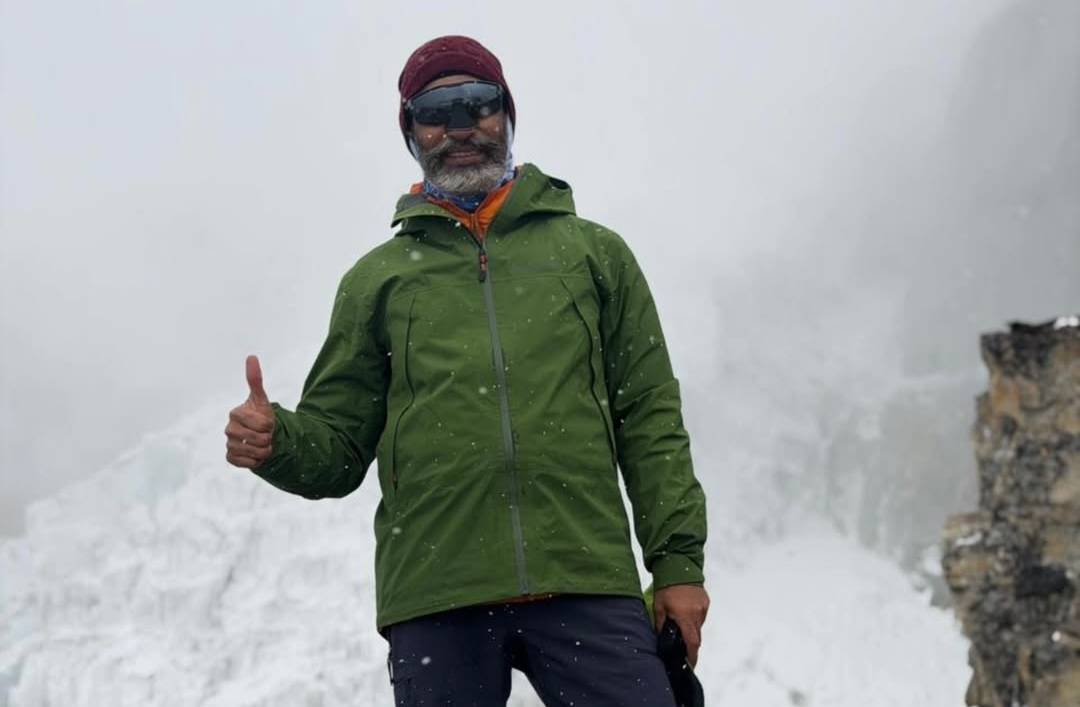
- Canadian mountaineer of Punjabi origin Ajaypal Singh Dhaliwal has etched his name into history after becoming the first Punjabi-Canadian to scale Mount Everest, surviving a terrifying brush with death during his descent from the world’s tallest peak.
Canadian mountaineer of Punjabi origin Ajaypal Singh Dhaliwal has etched his name into history after becoming the first Punjabi-Canadian to scale Mount Everest, surviving a terrifying brush with death during his descent from the world’s tallest peak.
Based in Brampton, Ontario, Dhaliwal reached the 8,848.86-metre summit on May 20 during one of the busiest and most successful climbing days recorded on Everest this season. Favourable weather conditions enabled hundreds of climbers to attempt the ascent from the Nepal side, with expedition officials confirming a record 274 successful summits in a single day.
For Dhaliwal, however, the achievement quickly turned into a desperate fight for survival.
After completing the summit push, the climber reportedly encountered severe difficulties while descending through the treacherous “Death Zone” — the high-altitude region above 8,000 metres where oxygen levels are dangerously low and human survival becomes increasingly difficult.
Accounts shared by friends and fellow climbers indicate that Dhaliwal’s oxygen reserves dropped critically during the descent. Exhausted and battling freezing winds, he was allegedly left behind after becoming separated from his Sherpa support guide.
The same expedition also witnessed tragedy, as two climbers from the group — Sandeep Are and Arun Kumar Tiwari — lost their lives while descending from the summit.
Despite the grim circumstances, Dhaliwal continued navigating the icy slopes using improvised techniques to stay alive. At one point, he reportedly slid down steep sections using his safety harness before crashing and losing consciousness in the extreme cold.
When he regained awareness in darkness and sub-zero temperatures, Dhaliwal used his headlamp to signal for help. A rescue effort by four climbers, including Mingma Tenzi Sherpa, ultimately proved life-saving. The team shared oxygen supplies and helped him continue the dangerous journey back down the mountain.
Friends and members of the Punjabi diaspora have described Dhaliwal’s survival as a story of extraordinary resilience and determination.
“This achievement is not only about reaching the summit,” said one close associate in a social media tribute. “It is about returning alive from one of the harshest environments on Earth.”
Dhaliwal’s accomplishment has generated pride among Punjabi communities in Canada and abroad, with many celebrating both his historic summit and his remarkable survival against overwhelming odds.
His Everest expedition is now being viewed not just as a mountaineering feat, but as a testament to endurance, courage and the will to survive in the face of near-certain danger.