


AI Generated Summary
- As scaffolding rises around long-silent wells and plans take shape for the Chali Khooh precinct, the city of sarovars is writing a new chapter in its eternal relationship with water — one drop, one khooh at a time.
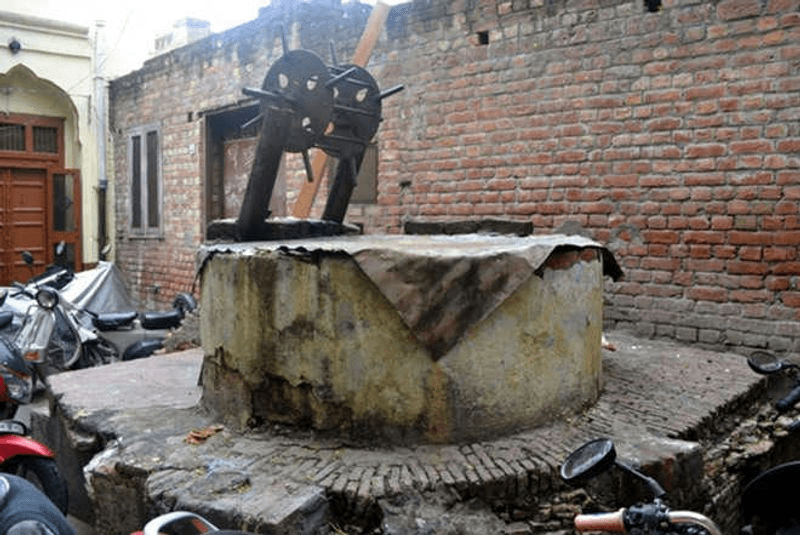
- Work is also progressing at the historic “Chali Khooh” (Forty Wells) site, a network sunk in 1904 during the British era to feed the city’s early tap water infrastructure.
- In a rapidly modernising Punjab, where concrete often overshadows the old rhythms of life, reviving khoohs offers a chance to honour the ingenuity of ancestors who engineered harmony with their environment.
In a city whose very name evokes the nectar of immortality drawn from sacred waters, a quiet but determined revival is underway. Amritsar, long celebrated as the “city of sarovars” for its historic network of holy tanks tied to Sikh gurus and spiritual life, is now turning its attention to restoring its humbler but equally vital water heritage: the traditional khoohs or wells that once sustained daily life across its old quarters.
The Amritsar Municipal Corporation’s General House has approved a budget of Rs 49 lakh to rejuvenate selected abandoned wells in the walled city. This move signals a broader push to reconnect with the city’s pre-modern water systems, many of which have been lost to urban expansion, neglect, and the shift to piped supplies. Work is also progressing at the historic “Chali Khooh” (Forty Wells) site, a network sunk in 1904 during the British era to feed the city’s early tap water infrastructure.
A Thirst Rooted in History
Amritsar’s identity has always been inseparable from water. The sacred Amrit Sarovar at Harmandir Sahib (the Golden Temple) gave the city its name, while the five prominent sarovars — Amritsar, Santokhsar, Ramsar, Kaulsar, and Bibeksar — remain focal points of faith and community. Religious sites like Toba Bhai Salo continue to draw devotees. Yet beyond these revered tanks, the old city once pulsed with hundreds of shared and private wells.
Historical maps tell a compelling story. A 1849 survey recorded around 300 wells; by 1947, the number had swelled to nearly 1,500. Groundwater lay shallow, making khoohs the lifeline for households and neighbourhoods. The city’s natural bowl-shaped topography functioned as an ingenious rainwater harvesting system, channelling flows toward the central shrine. Numerous ponds or dhabs dotted the landscape, though many were filled in during the early 20th century amid malaria and cholera outbreaks. Their memory lingers in local names like Dhaba Khatikaan and Dhaba Basti Ram.
Modernisation brought change. In 1904, British authorities introduced a system of 40 wells with overhead tanks. Reliable piped water arrived only in 1938 with electric pumps. As taps replaced ropes and buckets, many traditional wells fell into disuse, were built over, or repurposed — some becoming sites of small shrines to local saints or deities.
Wells with Stories to Tell
Several khoohs carry poignant historical weight. One near the infamous Crawling Street — site of the brutal crawling order during the Jallianwala Bagh era — bears witness to colonial repression. Another stands neglected near the ancestral home of poet Bhai Vir Singh in Katra Garbha Singh. A third, along the historic route from Harmandir Sahib to Guru Ke Mahal, has sadly become a dumping ground, troubling pilgrims and residents alike.
Conservationists have long sounded the alarm. Groups such as Eco Amritsar and Voice of Amritsar have stepped in to clean and highlight sites like the Bambay Wala Khuh, once reduced to a garbage pit. Their efforts underscore a growing awareness that these structures are more than relics — they are cultural anchors and potential tools for groundwater recharge in an era of depleting aquifers.
Aligning Tradition with Tomorrow
Civic officials describe the current initiative as part of a larger alignment with the Centre’s National Water Mission, which encourages the revival of traditional water bodies nationwide. Restoring these wells is expected not only to aid water conservation but also to enrich the city’s heritage fabric, especially as Amritsar promotes its walled city as a cultural destination.
For many residents, the project stirs deeper reflection. In a rapidly modernising Punjab, where concrete often overshadows the old rhythms of life, reviving khoohs offers a chance to honour the ingenuity of ancestors who engineered harmony with their environment. It is a reminder that Amritsar’s spiritual and practical thirsts have always been quenched from the same ancient sources.
As scaffolding rises around long-silent wells and plans take shape for the Chali Khooh precinct, the city of sarovars is writing a new chapter in its eternal relationship with water — one drop, one khooh at a time.