


AI Generated Summary
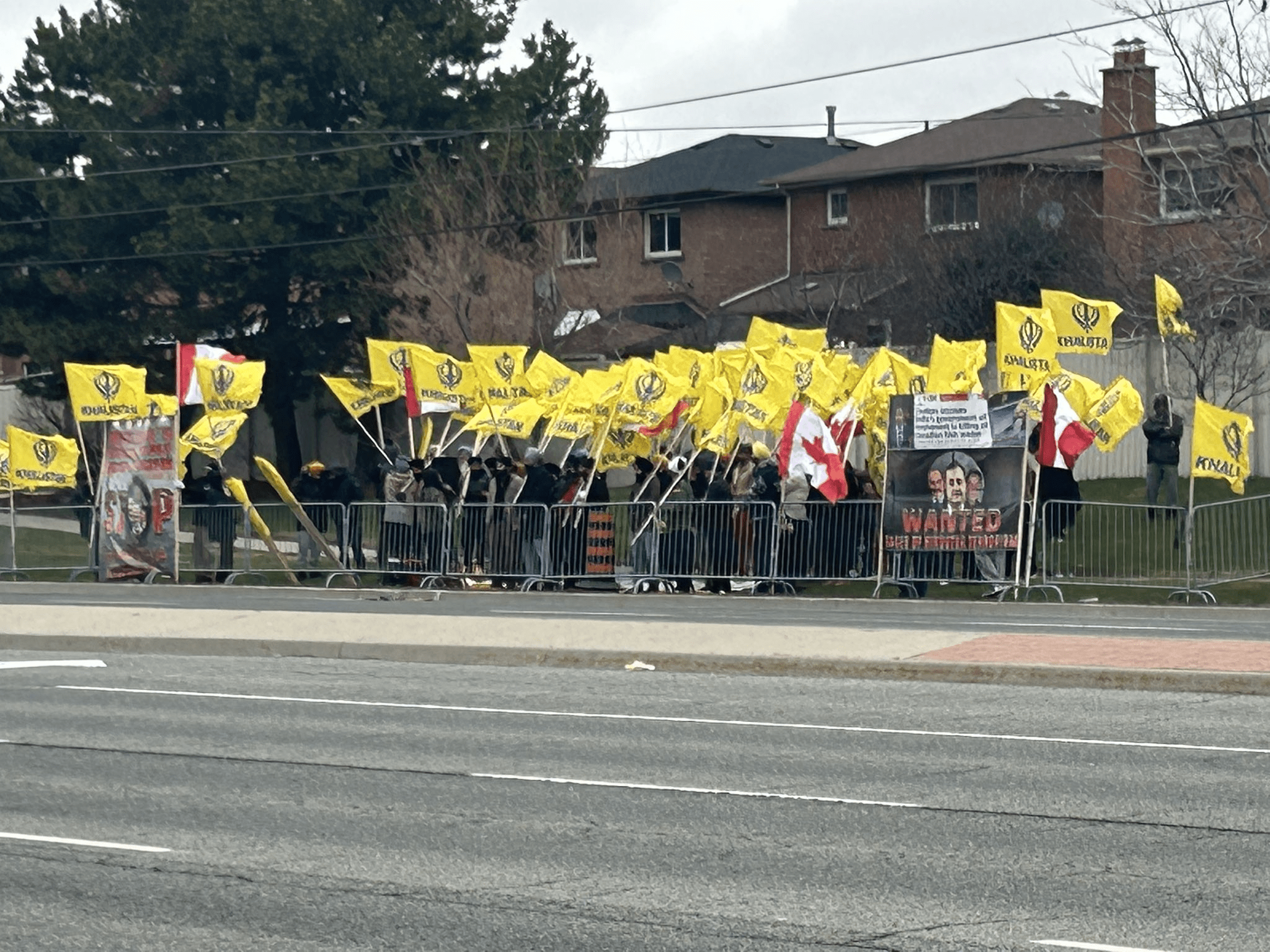
- On April 5th, pro-Khalistan activists under the banner of the proscribed extremist group Sikhs for Justice (SFJ) staged “Khalistan Zindabad” rallies outside the Triveni Mandir in Brampton, Ontario, and the Lakshmi Narayan Mandir in Surrey, British Columbia.
- This is the face of Khalistan extremism in Canada today—and it is dragging the entire Sikh community into disrepute.
- The Sikh community in Canada, the United Kingdom, the United States, and India wants nothing to do with this.
On April 5th, pro-Khalistan activists under the banner of the proscribed extremist group Sikhs for Justice (SFJ) staged “Khalistan Zindabad” rallies outside the Triveni Mandir in Brampton, Ontario, and the Lakshmi Narayan Mandir in Surrey, British Columbia. These were not peaceful expressions of dissent. They were calculated displays of intimidation aimed at Hindu places of worship, complete with the same violent imagery, abusive slogans, and threats that have become the hallmark of such events. Community groups like the Hindu Canadian Foundation and the Coalition of Hindus of North America rightly condemned them as xenophobic harassment masquerading as protest. Police had to impose safety zones and prepare for trouble. This is the face of Khalistan extremism in Canada today—and it is dragging the entire Sikh community into disrepute.
The Sikh community in Canada, the United Kingdom, the United States, and India wants nothing to do with this. We are doctors, teachers, entrepreneurs, soldiers, and neighbours who built lives through honest work and integration. In India, Sikhs form the backbone of the armed forces, agriculture, and industry; not a single mainstream Sikh organisation or political party in Punjab supports Khalistan. Abroad, the vast majority of gurdwaras focus on langar, kirtan, and community service, not separatism. Yet every time these fringe elements wave their flags and glorify terrorists, the world sees a turban and assumes “Sikh extremism.” This is not only unfair—it is dangerous. It fuels suspicion, hate crimes, and isolation for law-abiding Sikhs who have spent decades proving their loyalty to their adopted nations.
The violence is not rhetorical; it is real and recurring. In Canada, places of worship have become battlegrounds. Pro-Khalistan protesters have repeatedly targeted Hindu temples with assaults on devotees, temple invasions, loud abusive behaviour, and glorification of terrorism. The November 2024 violence outside Brampton’s Hindu Sabha Mandir spilled into streets with fists, flagpoles, and chaos that left the community traumatised. Gurdwaras themselves are not spared. Moderate Sikh leaders who refuse to toe the extremist line face intimidation, threats, and takeovers. Graffiti declaring “Khalistan” has defaced sacred walls. These acts desecrate the very spaces meant for prayer and unity. They turn houses of worship into arenas of fear, alienating not just Hindus but ordinary Sikhs who simply want to practise their faith in peace.
The same extremist playbook extends to diplomatic missions. In 2023, Khalistani mobs attacked the Indian High Commission in London, vandalising property and attempting arson. Similar violence hit the Indian Consulate in San Francisco and sparked unrest outside missions in Canada. In September 2025, SFJ openly threatened to “seize” the Indian Consulate in Vancouver. These are not protests—they are assaults on sovereign territory, criminal acts that endanger diplomats, staff, and public safety. Indian authorities have identified dozens of suspects involved in coordinated attacks across the US, UK, and Canada. Such behaviour does not advance any cause; it isolates the very community it claims to represent and strains relations between Canada and India, two nations where Sikhs have deep ties.
Why does this fringe movement persist? Because a handful of extremists, often based in Canada, exploit democratic freedoms to fund, plan, and glorify violence back in India. Canadian intelligence reports have repeatedly flagged Canada-based Khalistani extremists as continuing to support terrorism abroad. Yet too often, politicians and media hesitate to call it what it is—extremism—for fear of being labelled anti-Sikh. This hesitation only emboldens the radicals and leaves mainstream Sikhs to bear the reputational cost.
Canadian authorities have a duty here. Peaceful protest is a right, but violence, threats, and targeted harassment of places of worship are crimes. The recent safety-zone bylaw in Brampton is a welcome step; it must be enforced rigorously across provinces. Police must investigate intimidation at gurdwaras and temples without hesitation. Politicians must stop courting extremist votes at the expense of community harmony.
To our Sikh brothers and sisters: it is time to reclaim the narrative. Condemn these acts loudly, in our gurdwaras, on our platforms, and in our daily lives. Support interfaith initiatives that heal the wounds these protests inflict. Show Canada and the world what Sikhi truly stands for—courage without aggression, justice without vengeance, and service to all humanity.
