


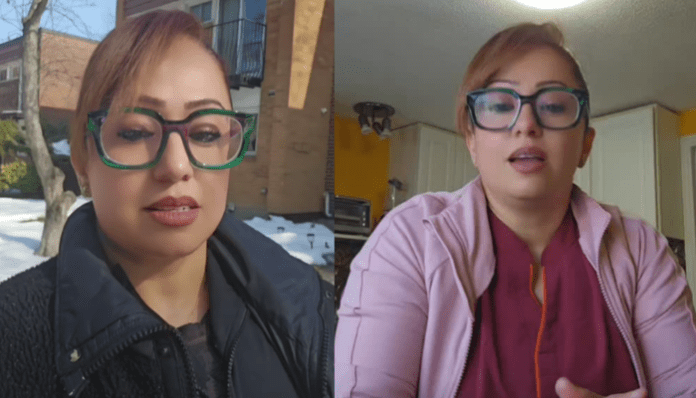
AI Generated Summary
- Indian media and diaspora voices have framed it as a targeted assassination of a critic, with some drawing parallels to transnational repression patterns—though here, the finger points firmly at separatist radicals rather than state actors.
- No breakthroughs in identifying or apprehending perpetrators have been publicly announced, with police urging the public for tips while declining to speculate on motives or comment directly on social media claims.
- In the past two days (March 7–9, 2026), new details have emerged that intensify scrutiny on the Khalistani extremism angle, even as the official investigation remains ongoing without arrests or named suspects.
The brutal stabbing death of Nancy Grewal, the 45-year-old Punjabi-origin social media influencer and vocal critic of the Khalistan movement, continues to send shockwaves through Canada’s South Asian communities and beyond. In the past two days (March 7–9, 2026), new details have emerged that intensify scrutiny on the Khalistani extremism angle, even as the official investigation remains ongoing without arrests or named suspects.
LaSalle Police, now assisted by the Ontario Provincial Police (OPP), reiterated on March 7 that the March 3 homicide on Todd Lane was a premeditated, targeted attack—not random violence. Chief Michael Pearce’s earlier statement emphasized confidence that the killing was “an intentional act against her personally.”
Calls to label Khalistan extremists terrorists follow 'heinous' LaSalle, Ont., murder https://t.co/wPaAQJRTFl pic.twitter.com/fWjwAls8c9
— Toronto Sun (@TheTorontoSun) March 9, 2026
No breakthroughs in identifying or apprehending perpetrators have been publicly announced, with police urging the public for tips while declining to speculate on motives or comment directly on social media claims.
The most chilling development remains the open claim of responsibility from a Sikh extremist-linked social media account, widely reported by CBC News and other outlets around March 6–7. The post explicitly stated that Grewal was killed because of her repeated criticisms of the Khalistan separatist movement, which seeks an independent Sikh homeland in India’s Punjab region. It included a stark warning: others who speak against Khalistan would face the “same fate.” This claim has not been independently verified by authorities, but it aligns eerily with Grewal’s documented history of receiving death threats and facing harassment from Khalistani elements.
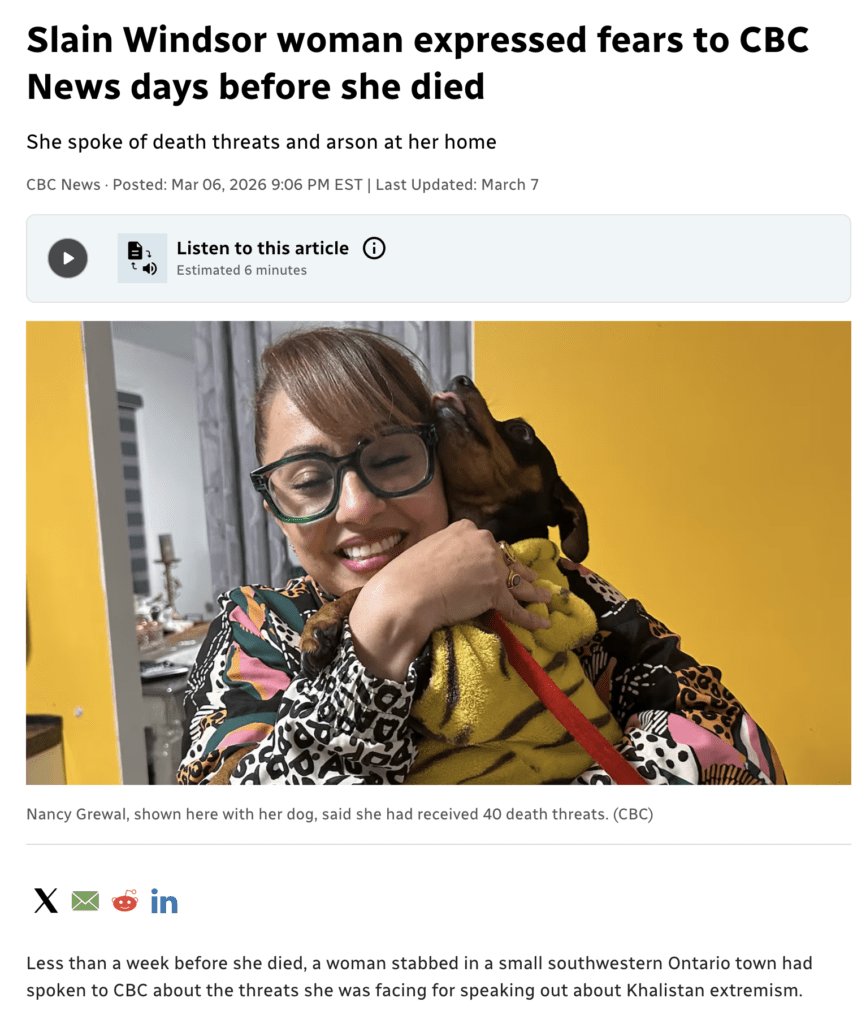
Just days before her death, Grewal had spoken to CBC about fearing for her life due to extremism within the Sikh separatist movement. She detailed prior incidents, including arson at her home and online threats tied to her outspoken videos opposing Khalistani ideology. Her family, including sister Alishaa Grewal, has described the attack as “pre-planned,” pointing to her activism as the clear motive. Reports indicate she was stabbed multiple times (some accounts cite around 18 wounds) while working alone as a personal support worker at a client’s home— a vulnerable position that extremists may have exploited.
The case underscores broader concerns about Khalistani extremism spilling into violence on Canadian soil, amid longstanding India-Canada tensions over the movement. Indian media and diaspora voices have framed it as a targeted assassination of a critic, with some drawing parallels to transnational repression patterns—though here, the finger points firmly at separatist radicals rather than state actors.
As the investigation deepens with OPP resources, the absence of arrests fuels speculation and outrage. Grewal’s supporters demand swift justice, viewing her death as a stark warning: in Canada, outspoken opposition to Khalistani extremism can carry a deadly price. Police continue to treat the case as isolated but targeted, and anyone with information is urged to contact them. The coming days may bring more clarity—or further revelations—into what appears to be a chilling act of extremist retribution.