


AI Generated Summary
- In Pandori village and beyond, Aarti Handa stands as a powerful example of how daughters can become the pillars of their households—breaking stereotypes one harvest at a time.
- Agriculture in Punjab is largely seen as a male-dominated field, but accepting the challenge, sustaining it and earning good returns with the support of my workers gives me immense satisfaction.
- Aarti, who holds a Master’s degree in English from SCD Government College along with her sisters Archna and Mridula, made a conscious choice to remain unmarried and stay by her father’s side.
In Punjab’s fertile heartland, where agriculture has long been viewed as a domain dominated by men, one woman’s steadfast dedication is quietly challenging those norms and bringing pride to her family.
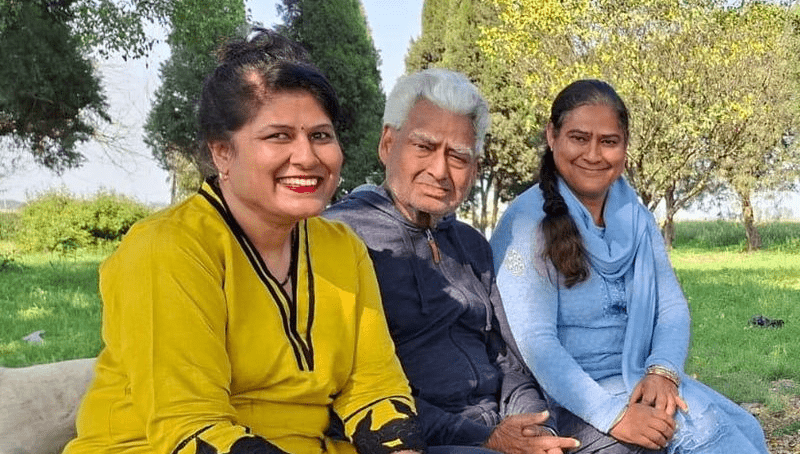
Professor A.K. Handa, a retired educator from Arya College in Ludhiana, always believed his three daughters would more than make up for not having a son. Today, that belief has been proven true in the most inspiring way. His eldest daughter, Aarti, has taken full responsibility for the family’s 15-acre farmland in Pandori village, near Ludhiana, embracing every aspect of farming with skill and determination.
Aarti, who holds a Master’s degree in English from SCD Government College along with her sisters Archna and Mridula, made a conscious choice to remain unmarried and stay by her father’s side. While Archna and Mridula have settled into happy married lives, Aarti has devoted herself to the land. Now in her fifties, she handles the complete cycle of agricultural operations—from sowing wheat and paddy, managing irrigation, overseeing harvesting, to marketing the produce.
Speaking to this newspaper, Aarti reflected on her path with quiet confidence: “I decided to stay with my father and therefore did not get married. Now in my fifties, I feel proud working in my fields. From sowing wheat and paddy to handling irrigation, harvesting and marketing the produce, I do it all. Agriculture in Punjab is largely seen as a male-dominated field, but accepting the challenge, sustaining it and earning good returns with the support of my workers gives me immense satisfaction.”
Her efforts have not gone unnoticed in a region where patriarchal traditions still influence many aspects of rural life. Aarti has stepped into roles traditionally reserved for sons, proving that gender need not limit capability or contribution.
Professor Handa, watching his daughter’s accomplishments, expresses deep gratitude and pride. “It is a matter of immense pride when women take the lead in a society still governed by patriarchal norms,” he said. “I have never felt the absence of a son. My daughters are my greatest strength.”
Aarti’s story highlights a growing, though still underrepresented, trend of women in Punjab taking charge of family farms amid changing social dynamics, labor shortages, and economic realities. Her success demonstrates that resilience, education, and determination can redefine family roles and contribute meaningfully to the agricultural economy.
In Pandori village and beyond, Aarti Handa stands as a powerful example of how daughters can become the pillars of their households—breaking stereotypes one harvest at a time.
