


AI Generated Summary
- a significant section of the Sikh community is demanding a reset in how politics intersects with religion—and is prepared to withhold symbolic legitimacy until that line is respected.
- A strong message emerging from Brampton’s Sikh community has drawn attention across the diaspora, as activists and community voices announced a political boycott aimed at Ontario’s leadership and local legislators.
- Community organisers say the appeal, which took effect immediately on January 14, is rooted in growing dissatisfaction over what they describe as the politicisation of gurdwaras and Sikh religious events.
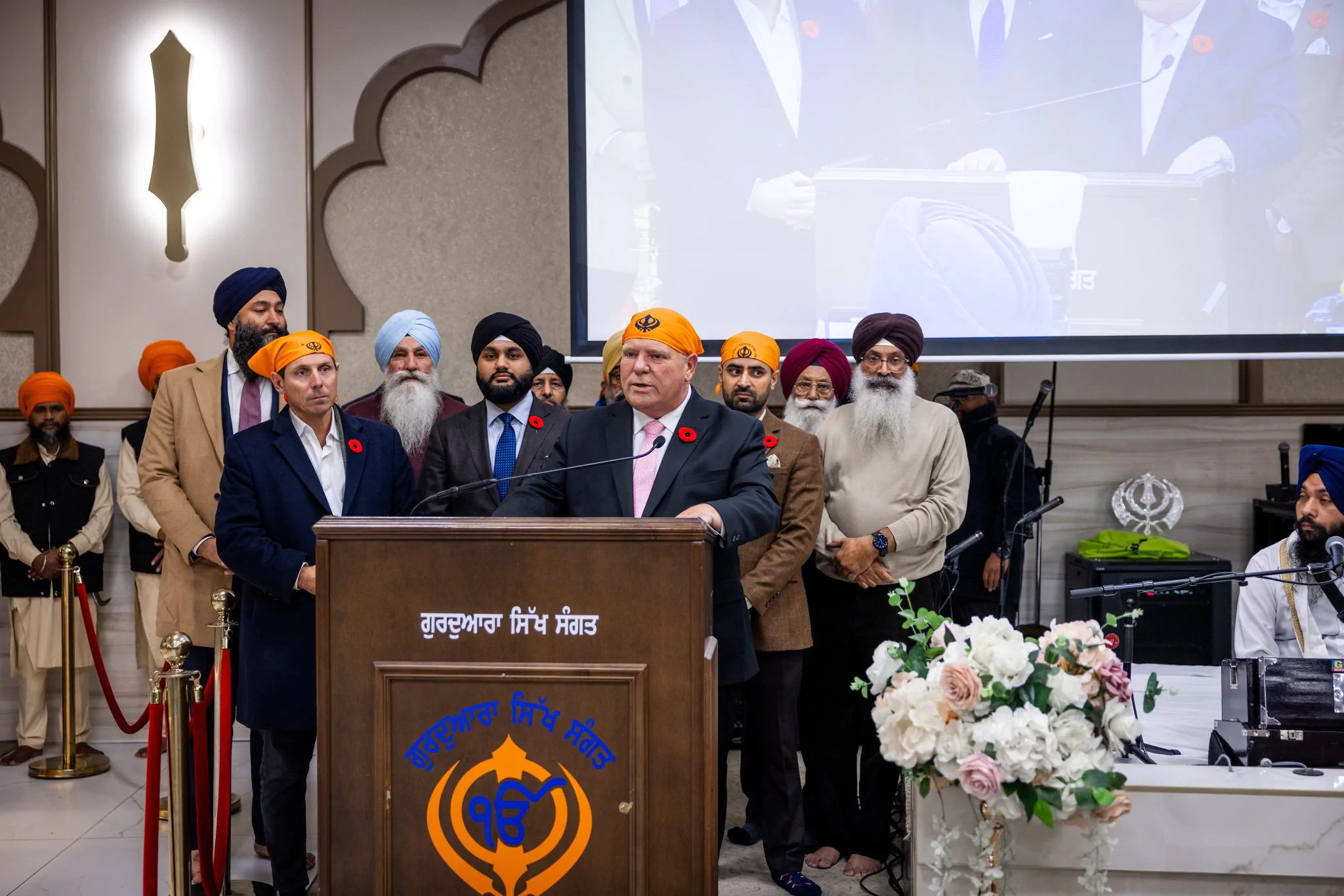
A strong message emerging from Brampton’s Sikh community has drawn attention across the diaspora, as activists and community voices announced a political boycott aimed at Ontario’s leadership and local legislators. The call urges the Premier of Ontario, Doug Ford, along with Members of Provincial Parliament (MPPs) from Brampton, to refrain from appearing on Sikh religious stages for political outreach.
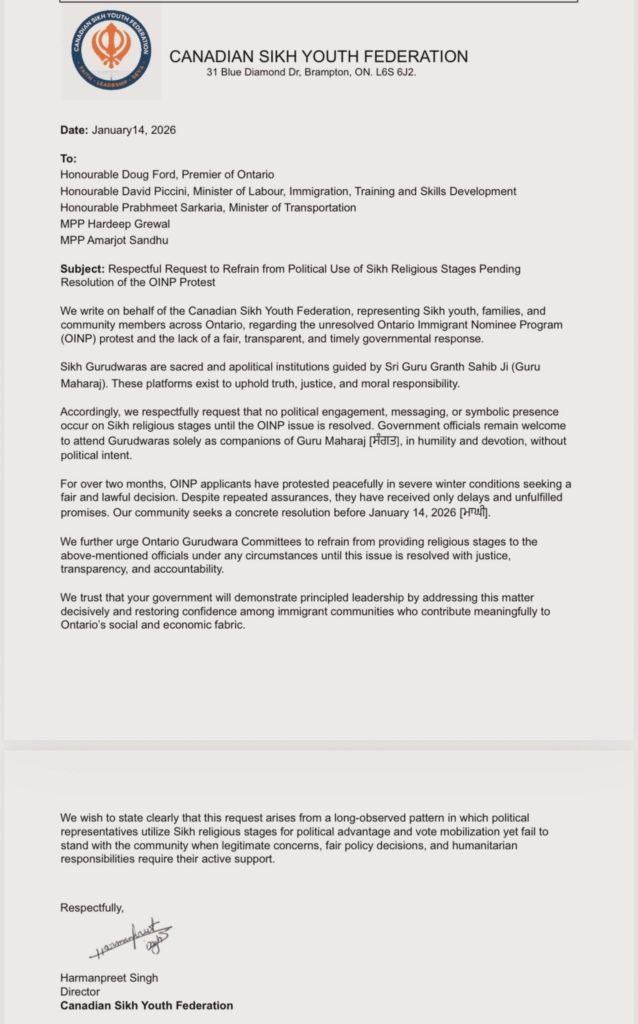
Community organisers say the appeal, which took effect immediately on January 14, is rooted in growing dissatisfaction over what they describe as the politicisation of gurdwaras and Sikh religious events. According to those leading the movement, religious spaces should remain independent of party politics and electoral calculations.
Those backing the boycott stress that the development is not a fleeting protest driven by social media outrage, but rather the culmination of long-standing grievances. They allege a pattern of selective justice, institutional failures, and leadership shortcomings that have eroded trust between sections of the Sikh community and political authorities in Ontario.
“This is being framed by organisers as a moment of collective awakening,” said a community observer in Brampton. “People feel that religious institutions have been repeatedly used as convenient platforms during election cycles, while core community concerns remain unaddressed.”
A central aspect of the debate now focuses on gurdwara management committees. Activists are openly questioning whether these bodies will assert their independence and uphold religious neutrality, or continue to allow political figures access to Sikh stages during religious programs.
For many Sikhs in Canada and Punjab alike, gurdwaras are seen not only as places of worship but also as symbols of collective dignity and self-respect. The current call challenges committees to define clear boundaries between faith and politics.
Whether the boycott leads to concrete changes in political engagement or gurdwara governance remains to be seen. However, the message from Brampton is unambiguous: a significant section of the Sikh community is demanding a reset in how politics intersects with religion—and is prepared to withhold symbolic legitimacy until that line is respected.