


AI Generated Summary
- At the centre of the effort is kabaddi coach Ranjit Singh, a former All India University Championship player who has spent the past 14 years training youngsters from rural Punjab.
- In a largely neglected playground in Kukrawala village, a modest training hall has emerged as an unlikely hub for producing competitive kabaddi players.
- Punjab secured a bronze medal at the tournament, ending an 18-year wait for a podium finish at the senior national level.
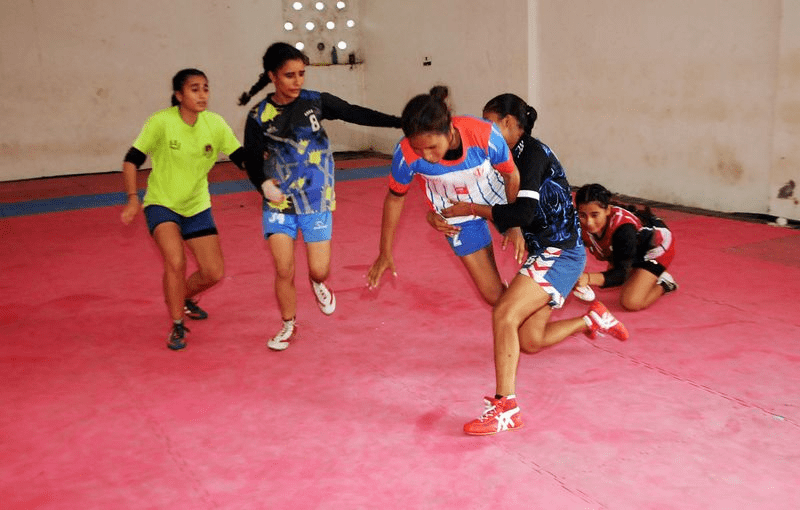
In a largely neglected playground in Kukrawala village, a modest training hall has emerged as an unlikely hub for producing competitive kabaddi players. Young boys and girls from villages across the region travel here to learn national-style kabaddi, the fast-paced mat-based format that has increasingly become the face of the sport at major competitions.
At the centre of the effort is kabaddi coach Ranjit Singh, a former All India University Championship player who has spent the past 14 years training youngsters from rural Punjab. During this period, he has coached more than 500 players, around 300 of whom have gone on to participate in national championships.
Working with limited infrastructure, Singh has also developed talent in Harsha Chhina village in Ajnala, a border subdivision of Amritsar district. His trainees have earned places in state teams and national-level camps, bringing recognition to an area where organised sporting facilities remain scarce.
Among the academy’s notable achievements came in 2024, when Gursahib Singh represented Punjab at the Senior National Kabaddi Championship in Odisha. Punjab secured a bronze medal at the tournament, ending an 18-year wait for a podium finish at the senior national level.
Another trainee, Jobanjeet Singh, was selected for the All India Sub-Junior India camp in 2024, while Rajbir Singh attended the All India Junior India camp in 2023.
The training centre currently has close to 90 players, including about 30 girls. Boys are being trained in the under-14, under-17, under-19, junior and senior categories, while girls compete across the under-17, under-19 and senior groups.
The state Sports Department presently provides dietary support to 21 trainees who have represented at the national level.
The academy’s record reflects its consistency. Over the past decade, its players have finished among the top three at various competitions on 68 occasions. Sporting success has also translated into employment opportunities for several trainees. More than 10 boys trained at the centre have joined the Army, while a woman player was recruited by the Central Reserve Police Force last year.
Singh credits Government Senior Secondary School, Harsha Chhina, for supporting his efforts and helping provide space for training despite the shortage of dedicated sports infrastructure.
The coach has also adapted his training methods to changes in competitive kabaddi. While circle-style kabaddi continues to enjoy popularity at village tournaments, national-style kabaddi has become increasingly important for players hoping to compete at higher levels.
Unlike circle-style kabaddi, where a raider generally encounters one defender at a time, the national format pits the raider against a seven-member defensive unit. The player must combine speed, strength, tactical awareness and quick decision-making while operating within a limited time.
The growth of professional franchise-based competitions and player auctions has further transformed kabaddi into a spectator-oriented sport, encouraging aspiring players to train specifically for the mat-based format.
Against this changing backdrop, Singh’s rural training programme has continued to produce international-level prospects and a steady stream of national competitors — demonstrating how organised coaching can turn village talent into high-level sporting achievement even in the absence of elaborate facilities.