


AI Generated Summary
- Bhai Lalo, the unassuming carpenter, became a living example of kirat karna—earning one’s living honestly—as one of the three pillars of Sikh teaching alongside naam japna (remembering the Divine) and vand chakna (sharing with others).
- Hearing that the revered Guru Nanak was in town, Malik Bhago sent repeated invitations, offended that a spiritual figure would prefer a lowly carpenter’s roof over his grandeur.
- He had amassed his fortune through taxes, bribes, and exploitation of the poor, squeezing the life out of farmers and laborers under his influence.
In the dusty lanes of Saidpur (now Eminabad, Pakistan), a simple carpenter named Bhai Lalo toiled daily with calloused hands. Born in 1452 into a modest family of the carpenter clan, Lalo earned his bread by crafting wooden tools and pegs through honest sweat. He lived frugally, shared what little he had with the needy, and greeted each dawn with contentment. No shortcuts, no exploitation—just pure, truthful labor.
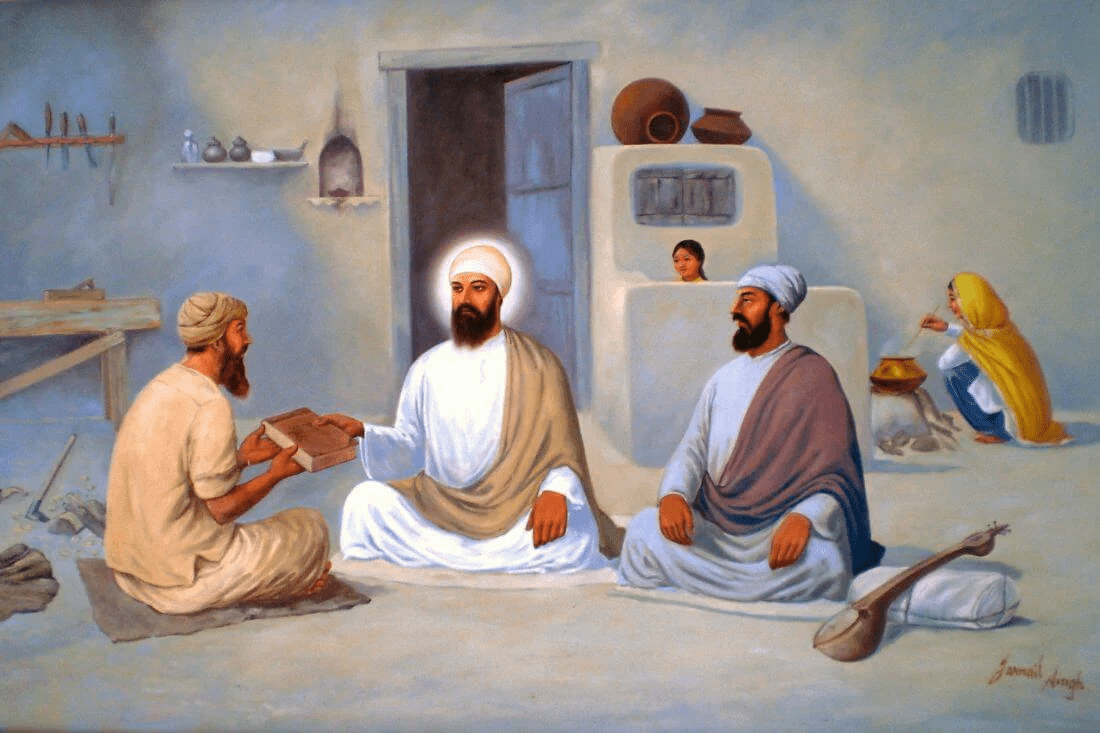
One day, during his early travels, Sri Guru Nanak Dev Ji arrived in the village with his companion Bhai Mardana. Drawn by Lalo’s humility, the Guru accepted his invitation to rest in the humble home. Lalo’s wife prepared a simple meal of dry chapatis, kneaded with love and earned without deceit. Guru Nanak partook joyfully, blessing the household for its sincerity. In Lalo’s modest dwelling, the air carried the quiet dignity of honest earnings.
Meanwhile, Malik Bhago, a wealthy government official and landlord, hosted a lavish feast for holy men and officials. Rich delicacies—fried sweets, buttered breads, and opulent dishes—overflowed his tables. He had amassed his fortune through taxes, bribes, and exploitation of the poor, squeezing the life out of farmers and laborers under his influence. Hearing that the revered Guru Nanak was in town, Malik Bhago sent repeated invitations, offended that a spiritual figure would prefer a lowly carpenter’s roof over his grandeur.
Guru Nanak politely declined at first, saying, “We are fakirs; what need have we for such feasts?” Pressed again, he finally went—but not alone. He took Bhai Lalo with him to Malik Bhago’s mansion.
The host bristled with anger and pride. “O Nanak,” he thundered, “you dishonor higher castes by eating dry bread in a low-caste carpenter’s house. My table offers the finest food. Why reject it?”
Guru Nanak remained serene. In one hand, he held Lalo’s plain chapati. In the other, a rich pancake from Malik Bhago’s feast. Before the astonished gathering, he squeezed both.
From Lalo’s simple loaf flowed pure, white milk—sweet, nourishing, symbolizing the wholesome essence of honest work. The crowd gasped in wonder. Then, from Malik Bhago’s fancy delicacy dripped blood—dark and accusing, revealing the suffering of the exploited.
“See, Malik Bhago,” Guru Nanak said calmly yet powerfully, “this milk is the fruit of truthful labor and pure intent. Bhai Lalo earns with dignity; his food sustains the soul. But your wealth is stained with the blood of the poor. You have sucked their life through greed and injustice. How can I accept what is born of cruelty when honest bread offers the sweetness of milk?”
Malik Bhago stood speechless, his arrogance shattered. The miracle pierced his conscience. Many present that day repented and turned toward righteous living. Bhai Lalo, the unassuming carpenter, became a living example of kirat karna—earning one’s living honestly—as one of the three pillars of Sikh teaching alongside naam japna (remembering the Divine) and vand chakna (sharing with others).
This timeless sakhi from Guru Nanak’s life illuminates a profound truth: no amount of ill-gotten riches can match the purity of earnings won through hard, ethical work. In an age of shortcuts, corruption, and materialism, Bhai Lalo’s loaf reminds us that real nourishment—for body, mind, and spirit—comes only from hands untainted by exploitation. Honest labor is not mere survival; it is sacred, life-giving, like milk. Unethical wealth, however glittering, remains blood.
Guru Nanak’s message endures: Choose the milk of integrity over the blood of greed. In that choice lies true liberation and blessing.