


AI Generated Summary
- It turned a man accused of training shooters and supporting drug peddlers into a victim narrative that sidelined the victims of those same networks — the families destroyed by drugs and the communities living under the threat of gang violence.
- He was a designated terrorist whose activities sat at the intersection of separatism, weapons training, and the drug trade that preys on young people in the diaspora.
- It is a direct admission that Nijjar was operating in the same underworld of guns, narcotics, and violence that has long fused Khalistani extremism with organised crime.
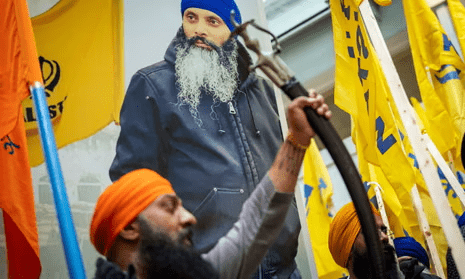
A leaked conversation between Goldy Brar and Paramjit Singh Pamma has cut through years of carefully constructed mythology. In the recording, Brar openly claims responsibility for the June 2023 killing of Hardeep Singh Nijjar in Surrey. His stated reason is straightforward: Nijjar supported people who used teenagers to sell drugs. That is why the gang eliminated him.
This is not ambiguous. It is a direct admission that Nijjar was operating in the same underworld of guns, narcotics, and violence that has long fused Khalistani extremism with organised crime.
Nijjar was designated a terrorist in 2020. Global agencies highlighted his role as the operational head of the Khalistan Tiger Force. He organized arms training camps in British Columbia where recruits practiced with AK-47s, sniper rifles, and pistols. He was linked to funding and directing targeted killings and attacks inside India. He maintained connections that stretched to Pakistan and the ISI. Investigators further accused him of using drug smuggling and extortion networks in Canada to finance these activities.
🚨 EXCLUSIVE AUDIO: A leaked conversation between Goldy Brar & Paramjit Singh Pamma, which I have carefully transcribed.
— Ruchi Wali 🇨🇦 (@WaliRuchi) August 22, 2026
In the recording, Brar claims responsibility for Hardeep Singh Nijjar’s killing. He says Nijjar supported people, who used youth to sell drugs & that is why… pic.twitter.com/J4euZkpcZM
The audio simply confirms what the record already showed. Nijjar was not a peaceful community leader caught in geopolitical crossfire. He was a designated terrorist whose activities sat at the intersection of separatism, weapons training, and the drug trade that preys on young people in the diaspora. When Brar says Nijjar strengthened those who used 16- and 17-year-olds as drug runners, he is describing a familiar pattern: extremist platforms providing cover and networks for criminal enterprise.
The United States has already charged Lawrence Bishnoi and Goldy Brar with directing Nijjar’s assassination. Canadian investigators have found no evidence of Indian government involvement. The killing was a gang hit, executed in the language of the underworld Nijjar inhabited. Brar’s confession removes the last pretence that this was purely political martyrdom.
For too long, sections of the diaspora and certain political voices in Canada treated Nijjar as a symbol rather than a subject of scrutiny. That approach protected the wrong people. It allowed the fusion of Khalistani radicalism, illegal weapons training, and narcotics networks to operate with less resistance. It turned a man accused of training shooters and supporting drug peddlers into a victim narrative that sidelined the victims of those same networks — the families destroyed by drugs and the communities living under the threat of gang violence.
Gangsters are not moral authorities. Brar’s claim of responsibility does not grant him legitimacy. But it does expose the reality that polite discourse preferred to ignore. Nijjar’s associations with guns, drugs, and terror were not Indian propaganda. They were the operational facts of his life in Canada.
Canada must confront the transnational crime and extremist networks operating on its soil without romantic filters. India must continue dismantling the gangs and handlers who project violence across borders. Both countries benefit when the focus stays on the actual threat: armed extremists, drug networks that recruit minors, and the criminal ecosystems that thrive when ideology provides cover.
The audio does not complicate the picture. It clarifies it. Nijjar lived and died in the world of guns, drugs, and terror. Pretending otherwise only prolongs the damage.