

AI Generated Summary
- British Columbia Premier David Eby branded these outreach efforts as “treason,” declaring that “to go to a foreign country and to ask for assistance in breaking up Canada, there’s an old-fashioned word for that, and that word is treason.
- State Department officials multiple times, discuss a potential $500 billion credit line for an independent Alberta, and frame it as “fact-finding,” it triggers accusations of betrayal and threats to national unity.
- If soliciting foreign support to dismantle part of Canada undermines its integrity and warrants strong condemnation, then hosting and excusing movements that openly seek to dismantle another sovereign nation through similar means, rallies calling for partition, funding drives, and rhetoric that normalizes extremism, demands the same scrutiny.
The recent furor over Alberta separatists meeting with U.S. officials to explore independence—and seeking substantial financial backing—has exposed a glaring hypocrisy in Canadian political rhetoric on sovereignty and separatism. British Columbia Premier David Eby branded these outreach efforts as “treason,” declaring that “to go to a foreign country and to ask for assistance in breaking up Canada, there’s an old-fashioned word for that, and that word is treason.”
Prime Minister Mark Carney took a more measured tone, urging the U.S. to “respect Canadian sovereignty” without echoing the treason label, but the message was clear: foreign involvement in fracturing the nation is unacceptable.
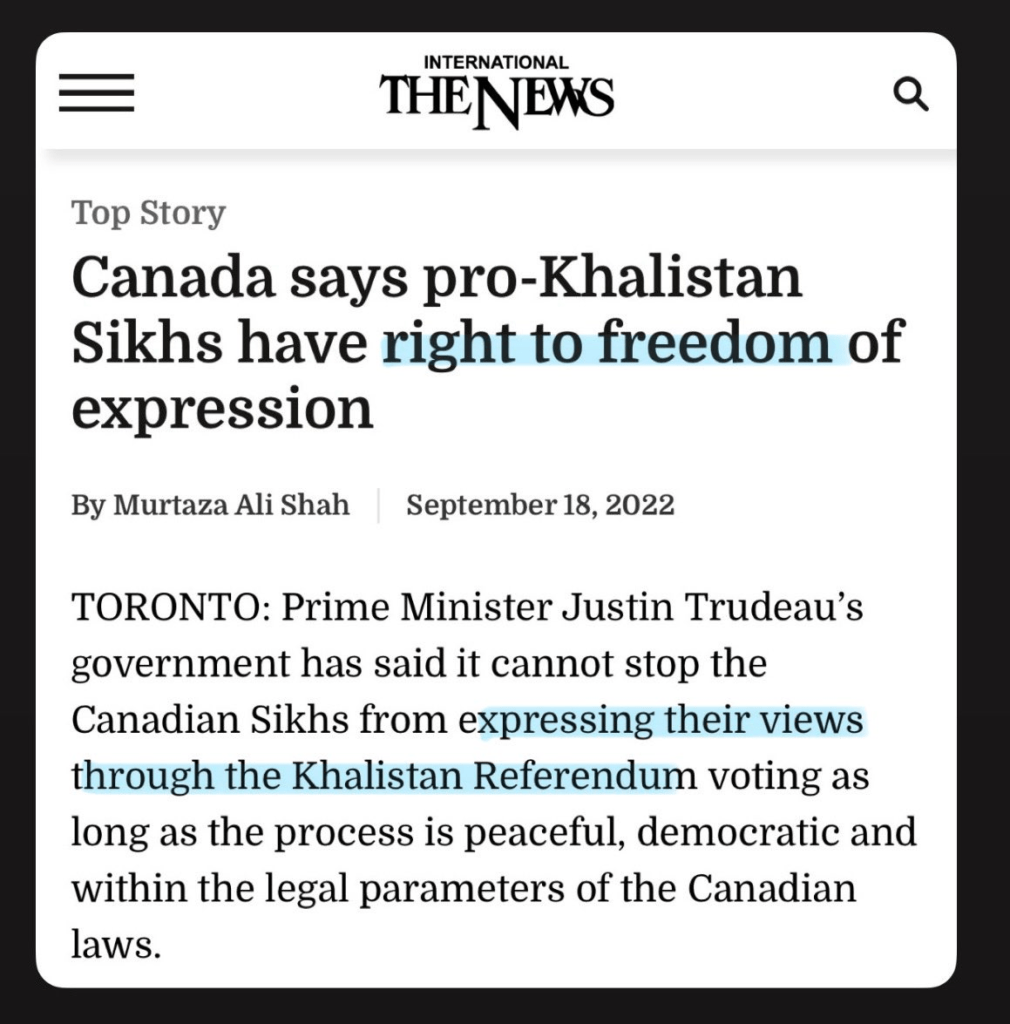
Yet this principled stand rings hollow when viewed against Canada’s long-standing tolerance of Khalistani separatist activities on its soil. For decades, Sikh extremists advocating for an independent Khalistan have operated openly in Canada, holding rallies, fundraising, and even glorifying violence, often under the shield of “free speech.” India has repeatedly raised alarms, with its intelligence and officials pointing to Canada as a hub for promotion, fundraising, and planning of violence targeting India. Canadian security agencies like CSIS have acknowledged that Khalistani extremists use the country as a base for such activities. Ottawa’s consistent response? Peaceful advocacy for separatism is protected expression, while only overt violence crosses into criminal territory.
The double standard is stark and indefensible. When Alberta Prosperity Project leaders meet U.S. State Department officials multiple times, discuss a potential $500 billion credit line for an independent Alberta, and frame it as “fact-finding,” it triggers accusations of betrayal and threats to national unity. Eby’s “treason” rhetoric frames seeking foreign assistance for secession as inherently disloyal and dangerous. Apply that logic consistently, and Canada’s permissive stance toward Khalistani groups, some of whom have ties to intimidation, threats, and historical violence like the Kanishka Air India bombing, where mostly Canadian citizens were killed, becomes impossible to justify.
Sovereignty is not a selective principle. If soliciting foreign support to dismantle part of Canada undermines its integrity and warrants strong condemnation, then hosting and excusing movements that openly seek to dismantle another sovereign nation through similar means, rallies calling for partition, funding drives, and rhetoric that normalizes extremism, demands the same scrutiny. Canada cannot claim moral high ground on territorial integrity while dismissing India’s concerns as overreach or intolerance of free expression. The Khalistan movement has involved not just peaceful advocacy but documented cases of extremism, yet Canadian leaders often retreat to Charter protections rather than confronting the security implications.
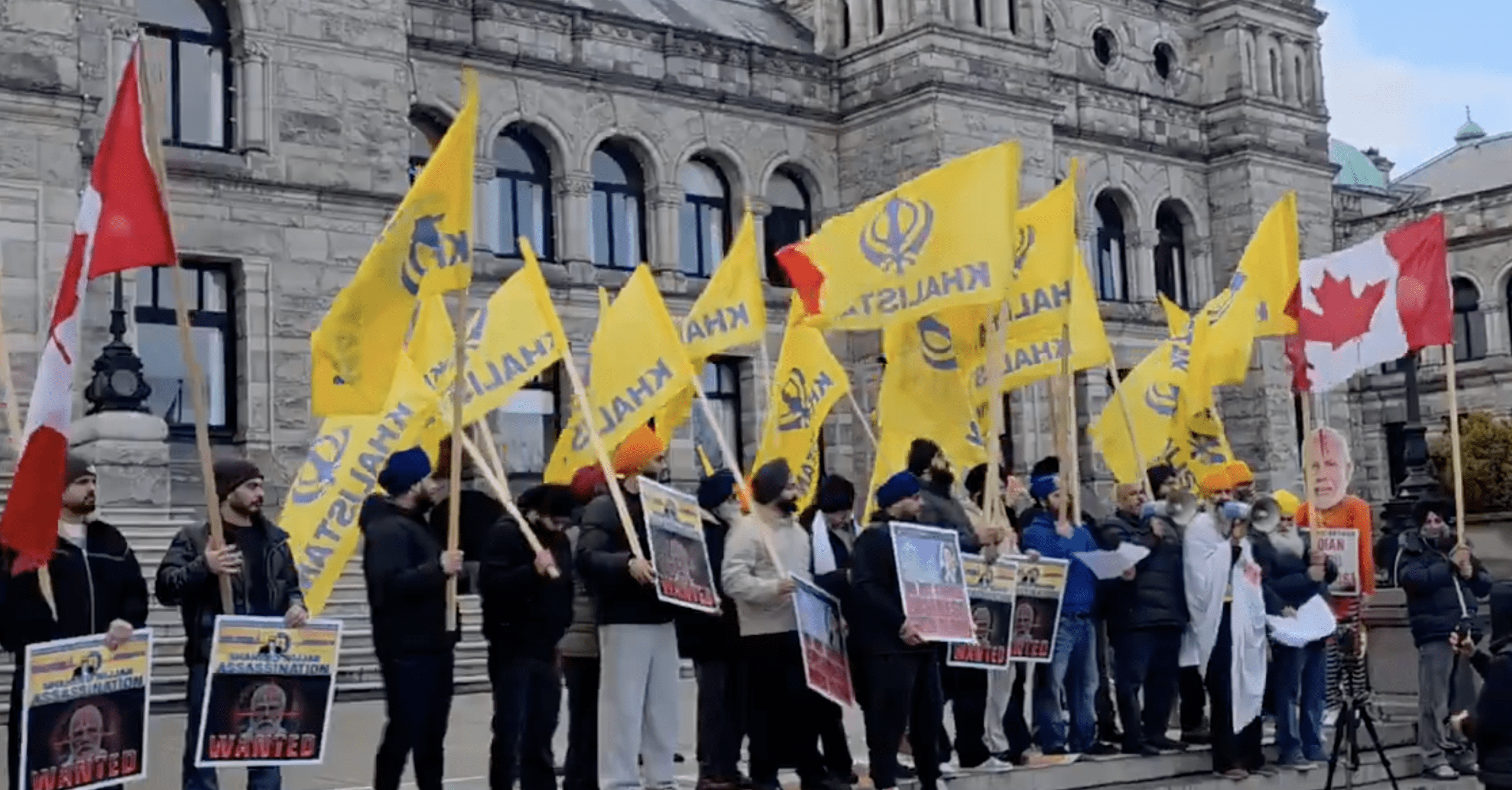
Khalistan Sikhs at B.C. Legislative Assembly, Victoria.
— Bruce (@bruce_barrett) January 9, 2026
They are angry about a trade deal with India.
Canada needs Remigration urgently. Send them back to India and they can protest there. pic.twitter.com/VtrgEDMDhF
This inconsistency erodes trust in Canada’s commitment to national security and fair application of principles. It fuels perceptions of hypocrisy, especially abroad, where nations like India see Ottawa’s outrage over Alberta as karmic irony. True defenders of sovereignty apply the same standards at home and in bilateral relations: movements promoting secession through intimidation, foreign alliances, or veiled threats to stability merit consistent opposition, regardless of the target country or domestic political expediency.
Canada’s leaders, including Eby and Carney, should reflect on this moment. If foreign-backed separatism is a red line for Canadian unity, it must be a red line everywhere. Selective enforcement only weakens the very sovereignty they claim to protect. National security and territorial integrity demand consistency—no exceptions, no double standards.