


AI Generated Summary
- With more than ₹5,470 crore committed to the Jalandhar region alone, as part of a wider national infrastructure push, the announcements point to a state betting its economic future on connectivity — and that bet deserves a closer look.
- Taken together — the stations, the new lines, the expressway, the bypass — these projects represent a coherent, multi-modal investment in the physical arteries connecting Punjab to the rest of India.
- The completion of Package-6 of the Delhi-Amritsar-Katra Expressway, which promises to cut Delhi-Amritsar travel time to roughly four hours, is a genuine leap for a corridor long defined by congested national highways and unpredictable travel times.
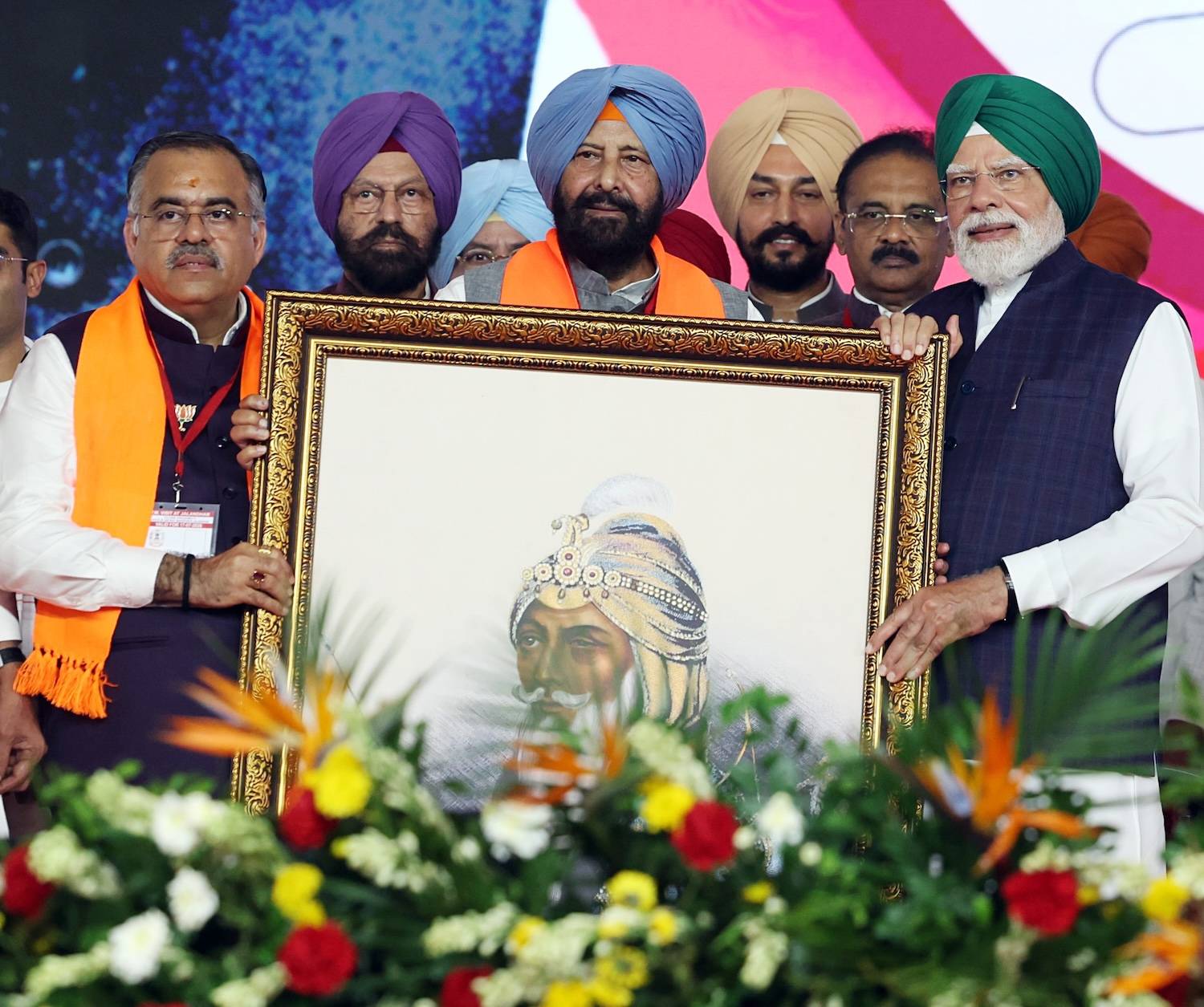
When Prime Minister Narendra Modi arrived in Punjab to inaugurate and lay foundations for a cluster of rail and road projects, the visit carried a symbolism that went beyond ribbon-cutting. With more than ₹5,470 crore committed to the Jalandhar region alone, as part of a wider national infrastructure push, the announcements point to a state betting its economic future on connectivity — and that bet deserves a closer look.
The rail component is arguably the more culturally resonant of the two. The redevelopment of Jalandhar Cantt, one of 75 stations being rebuilt nationwide under the Amrit Bharat scheme, promises not just cleaner platforms and better passenger amenities but stations designed to reflect local heritage. That is a small but meaningful shift in how India thinks about public infrastructure: not as sterile utility, but as civic space worth taking pride in.
More consequential, in practical terms, is the new Daulatpur Chowk–Kartoli rail line, part of the roughly ₹830 crore Nangal Dam–Talwara–Mukerian project. This line does more than shorten a commute — it stitches Punjab more tightly to Himachal Pradesh and eases the journey to Anandpur Sahib, one of Sikhism’s most significant pilgrimage sites. Add to this the new Kartoli-Ambala and Amritsar-Varanasi train services, and a pattern emerges: this is infrastructure built as much for faith and family travel as for freight and finance.
On the road side, the numbers are larger still — over ₹3,000 crore in this package alone. The completion of Package-6 of the Delhi-Amritsar-Katra Expressway, which promises to cut Delhi-Amritsar travel time to roughly four hours, is a genuine leap for a corridor long defined by congested national highways and unpredictable travel times. The foundation-laying for the six-lane Southern Ludhiana Bypass addresses a more localized but equally pressing problem: a city whose industrial base has long been strangled by through-traffic that has no business being in the city center at all.
Why This Matters for Punjab Specifically
It would be easy to treat this as one more round of infrastructure announcements in a country that produces them constantly. But Punjab’s economic profile makes the timing and substance genuinely significant. This is a state whose prosperity has always run on two rails of its own: agriculture and the movement of goods. Faster, more reliable road and rail links translate directly into lower logistics costs, reduced post-harvest losses, and quicker access to national and export markets for a state that remains central to India’s food security.
The bypass and expressway projects, in particular, speak to freight efficiency — getting Punjab’s produce and manufactured goods to market faster and more cheaply, while unclogging urban centers like Ludhiana that have paid an economic price for inadequate road planning. Meanwhile, the redeveloped stations and new religious-corridor rail links open a second front: tourism and pilgrimage-driven local economies, which have historically been underexploited relative to their potential.
There is also the less glamorous but equally important employment dimension. Construction of this scale — bridges, bypasses, station redevelopment — generates work now, while the completed assets generate operational and allied-sector employment for years afterward. For a state grappling with agrarian distress and youth outmigration, that is not a trivial benefit.
Taken together — the stations, the new lines, the expressway, the bypass — these projects represent a coherent, multi-modal investment in the physical arteries connecting Punjab to the rest of India. If delivered on time, they could do more than shave hours off a journey. They could reposition Punjab from a state defined by its agricultural past to one integrated into the logistics-driven, mobility-first economy India is trying to build. That is a future worth building tracks and tarmac toward — provided the follow-through matches the fanfare.