


AI Generated Summary
- In a swift and significant breakthrough, Punjab Police and Chandigarh Police have dismantled an ISI-backed terror module responsible for the grenade attack on the Punjab BJP headquarters in Sector 37, Chandigarh, on April 1, 2026.
- The network employed multiple “cutouts” and sub-modules to conceal the trail, highlighting a sophisticated transnational conspiracy aimed at disrupting peace in the region.
- Security agencies described the attack as part of a larger attempt to create panic and instability in Punjab and Chandigarh.
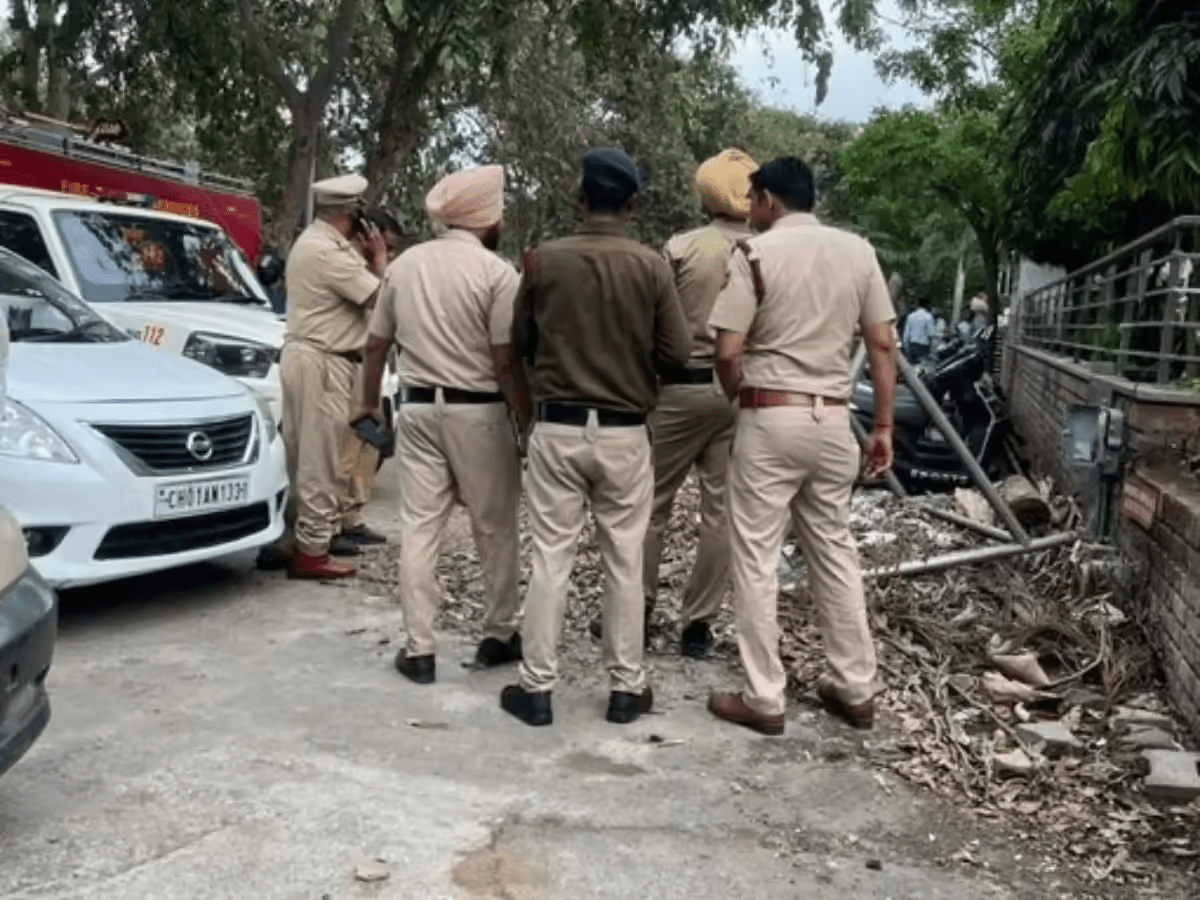
In a swift and significant breakthrough, Punjab Police and Chandigarh Police have dismantled an ISI-backed terror module responsible for the grenade attack on the Punjab BJP headquarters in Sector 37, Chandigarh, on April 1, 2026. The low-intensity blast, which occurred around 5 pm when a suspected crude grenade was hurled near the office, caused minor damage to a parked scooter but resulted in no casualties.
Punjab DGP Gaurav Yadav and Chandigarh DGP Dr. Sagar Preet Hooda jointly announced the arrests on April 4. The five individuals detained are Balwinder Lal alias Shami, Jasvir Singh alias Jassi, Charanjit Singh alias Channi, Rubal Chauhan, and Mandeep alias Abhijot Sharma. Two primary perpetrators involved in the actual attack have been identified and are still at large. During the operation, police recovered a live hand grenade, a .30 bore Zigana pistol, and live cartridges.
Preliminary investigations reveal that the module operated under direct instructions from foreign-based handlers located in Portugal and Germany, with clear backing from Pakistan’s Inter-Services Intelligence (ISI). Portugal-based handler Baljot Singh alias Jot reportedly coordinated the delivery of weapons and execution of the strike. The network employed multiple “cutouts” and sub-modules to conceal the trail, highlighting a sophisticated transnational conspiracy aimed at disrupting peace in the region.
Security agencies described the attack as part of a larger attempt to create panic and instability in Punjab and Chandigarh. A claim of responsibility linked to Babbar Khalsa International is also under scrutiny. The joint counter-intelligence operation has not only solved the case within three days but is believed to have averted potential larger threats.
This incident underscores the persistent efforts by external forces to destabilize India through proxy modules. Authorities have vowed to pursue all leads and bring the remaining accused to justice, reinforcing the strong coordination between state and central agencies in combating cross-border terrorism. The arrests send a clear message that such attempts to target political institutions will be met with resolute action.