


AI Generated Summary
- Despite his managerial role, Gill remains deeply involved in daily operations, commuting from the city each morning to work alongside his team — a routine he attributes to the discipline he developed overseas.
- One such story is that of Harpreet Singh Gill, who swapped life in the United States for the fields of his home state and has since built a successful modern farming enterprise.
- His journey reflects a broader shift in Indian agriculture — one that blends modern techniques, entrepreneurial thinking, and a renewed connection between consumers and the source of their food.
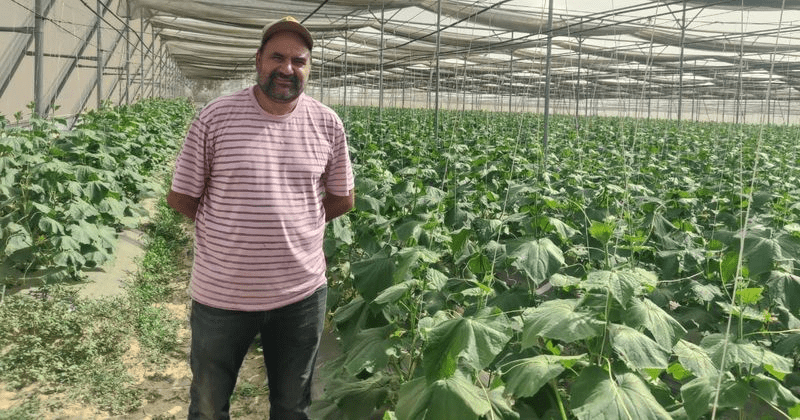
In the fertile plains of Punjab, a quiet agricultural transformation is taking root, led by individuals willing to rethink traditional farming. One such story is that of Harpreet Singh Gill, who swapped life in the United States for the fields of his home state and has since built a successful modern farming enterprise.
Gill returned to India after nearly a decade abroad and, in 2017, began with a modest one-acre experiment cultivating English seedless cucumbers. What started as a small initiative has now grown into an eight-acre, technology-driven farm in Dayalpura village near Amritsar.
Today, the farm operates primarily under net-house conditions across six acres, allowing for controlled cultivation. This approach enables Gill to grow high-quality cucumbers free from harmful chemicals, with two production cycles annually. On average, his farm produces nearly 200 bags of cucumbers each day, alongside a variety of organic fruits and vegetables.
Beyond production, the venture has also become a source of livelihood for around 25 workers, who are engaged in tasks ranging from planting and mulching to harvesting and maintenance. Despite his managerial role, Gill remains deeply involved in daily operations, commuting from the city each morning to work alongside his team — a routine he attributes to the discipline he developed overseas.
However, success has not come without hurdles. One of the biggest challenges, Gill notes, lies in marketing. While cucumbers fetch around ₹40–50 per kg in urban retail markets, farmers often receive as little as ₹10 per kg at the farm gate. Increased competition, particularly from subsidised produce entering Punjab from neighbouring states, has further squeezed margins.
To address this gap, Gill is exploring innovative solutions. He plans to launch a farm-visit initiative aimed at connecting urban consumers directly with agriculture. Under this model, visitors will be able to tour the farm, harvest produce themselves, and purchase it fresh at reasonable prices. The idea is to create both an experiential outing for families and a more profitable, direct-to-consumer sales channel.
Gill believes that the future of farming lies in innovation and adaptability. “Agriculture can be profitable,” he says, “but only if farmers are willing to think beyond conventional practices and explore new models.”
His journey reflects a broader shift in Indian agriculture — one that blends modern techniques, entrepreneurial thinking, and a renewed connection between consumers and the source of their food.