


AI Generated Summary
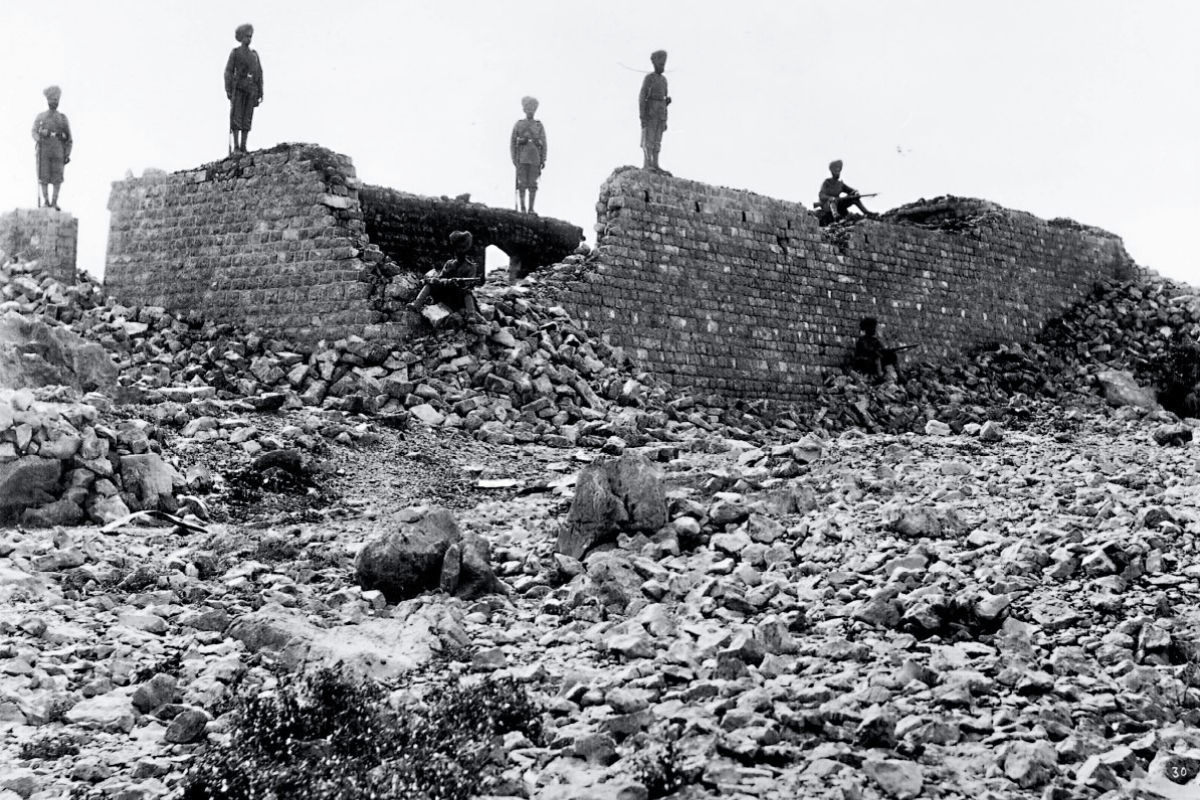
- On September 12, 1897, 21 men of the 36th Sikh Regiment of the British Indian Army found themselves surrounded at Saragarhi, a small communication outpost in the rugged North-West Frontier region.
- A statement subsequently associated with the parliamentary tribute declared that both Britain and India were proud of the soldiers of the 36th Sikh Regiment and praised the fighting reputation of Sikh troops.
- Brigadier Kanwaljit Singh, in his book The Iconic Battle of Saragarhi, records that Ishar Singh wanted the attackers to advance within the effective firing range of the defenders before his men opened fire.
On September 12, 1897, a small Sikh detachment guarding a lonely signalling post on the North-West Frontier fought against overwhelming odds. More than a century later, the Battle of Saragarhi remains one of the most enduring accounts of courage and sacrifice in Indian military history.
There are battles remembered for the territory they won and wars remembered for the empires they changed. Saragarhi is remembered for something different — the decision of 21 soldiers to hold their position when survival had become virtually impossible.
On September 12, 1897, 21 men of the 36th Sikh Regiment of the British Indian Army found themselves surrounded at Saragarhi, a small communication outpost in the rugged North-West Frontier region.
Their duty was crucial. Saragarhi served as the signalling link between Fort Lockhart and Fort Gulistan, two important military positions separated by difficult terrain. From the outpost, soldiers relayed information about troop movements and impending threats.
That morning, however, the men stationed there were confronted by thousands of Afghan tribesmen.
What followed over the next several hours would turn an obscure frontier post into a lasting symbol of military valour.
A battle against overwhelming odds
The detachment was commanded by Havildar Ishar Singh. Faced with an enemy vastly superior in number, the soldiers could not rely on reinforcements or manoeuvre. Their strongest advantage was their defensive position and the effective use of their limited ammunition.
The men were equipped with single-shot Martini-Henry rifles. Accounts of the battle state that each soldier carried around 400 rounds of ammunition — 100 on his person and another 300 held in reserve.
Rather than waste ammunition by firing at the advancing tribesmen from too great a distance, Ishar Singh reportedly instructed his men to wait.
Brigadier Kanwaljit Singh, in his book The Iconic Battle of Saragarhi, records that Ishar Singh wanted the attackers to advance within the effective firing range of the defenders before his men opened fire.
The tactic extracted a heavy price from the attacking force. Around 60 tribesmen were reportedly killed within the first hour.
But numbers remained overwhelmingly against the defenders.
As the fighting continued, the attackers moved closer to the post. The Sikh soldiers continued firing even as their ammunition diminished and their defensive position became increasingly difficult to hold.
The battle ultimately moved from long-range rifle fire to a desperate struggle for the outpost itself.
Seven hours of resistance
The defence of Saragarhi continued for approximately seven hours.
One of the names that emerged prominently from accounts of the final stages was Sepoy Gurmukh Singh, the unit’s signaller. Until the battle neared its end, he had been transmitting developments from Saragarhi.
Former Punjab Chief Minister Captain Amarinder Singh, in his book Saragarhi and the Defence of the Saamna Fort, wrote that Gurmukh Singh killed at least 20 attackers while fighting alone.
The attackers eventually set the post ablaze.
Yet surrender did not follow.
One after another, the 21 defenders were killed. By the time Saragarhi fell, none of the Sikh soldiers stationed at the post had survived.
The casualties they inflicted were considerable. Historical accounts cited by Captain Amarinder Singh put the number of tribesmen killed at between 180 and 200, while approximately 600 more were injured.
The figures underline the extraordinary imbalance at the heart of the battle: 21 men had held a vastly larger force at bay for hours.
From a frontier post to military folklore
News of Saragarhi travelled quickly beyond India.
When reports of the battle reached Britain, the sacrifice of the soldiers was acknowledged in Parliament. Members reportedly rose to honour the fallen men.
A statement subsequently associated with the parliamentary tribute declared that both Britain and India were proud of the soldiers of the 36th Sikh Regiment and praised the fighting reputation of Sikh troops.
Recognition also came through military honours.
All 21 defenders were posthumously awarded the Indian Order of Merit, the highest gallantry decoration then available to Indian soldiers of the British Indian Army. Indian soldiers were not at that time eligible for the Victoria Cross under the same conditions as their British counterparts.
But the significance of Saragarhi eventually grew far beyond the decorations awarded after the battle.
For generations, the story has occupied a special place in Punjab and in Sikh military tradition. It is recalled not simply because the soldiers died in battle, but because they continued to perform their duty despite knowing how heavily the odds were stacked against them.
Their resistance came to embody qualities deeply associated with the Sikh martial tradition — courage in adversity, steadfastness, service and the refusal to surrender before seemingly insurmountable circumstances.
A memorial built around remembrance
That legacy is preserved not only in military histories but also in a distinctive memorial in Punjab.
Near the Town Hall in Amritsar stands the Saragarhi Memorial Gurdwara, built in memory of the 21 soldiers.
Designed by renowned architect Bhai Ram Singh — also associated with the historic Khalsa College in Amritsar — the memorial was opened in 1904.
Its form makes the remembrance of Saragarhi particularly significant. It is not simply a conventional war monument of stone and inscriptions. It is a gurdwara, placing the memory of the soldiers within a living space of faith and reflection.
The names of the 21 men are inscribed on a marble tablet there, permanently recording the identities behind a story that can otherwise become overwhelmed by numbers and legend.
Visitors therefore encounter Saragarhi not merely as an episode from a distant military campaign but as the story of individual soldiers whose names have survived for more than a century.
The meaning of Saragarhi
Nearly 130 years after the battle, Saragarhi continues to command attention because its central question remains timeless: what does a soldier do when the odds have become impossible?
For the 21 men of the 36th Sikh Regiment, the answer on September 12, 1897, was to remain at their post.
They could not prevent Saragarhi from eventually falling. But for seven hours, a tiny garrison resisted a force numbering in the thousands, inflicting heavy casualties and continuing to communicate vital information even as the outpost came under attack.
That distinction is important. Saragarhi is not remembered as a conventional military victory. Its legacy lies in the conduct of the men who fought there.
Every September 12, their story returns to public memory. The battlefield belonged to another century and the frontier on which they fought has long since changed.
But in Amritsar, their names remain carved in marble.
And in the military history of Punjab, Saragarhi remains shorthand for something harder to inscribe in stone — the determination to stand one’s ground when there is almost no possibility of coming back.