


AI Generated Summary
- When the wider Indian society remembers the sacrifices and teachings of the Sikh Gurus with respect, it sends a broader message that Sikh heritage is not the heritage of one community alone, but a shared heritage of India.
- Remembering the extraordinary courage and sacrifice of the Sahibzadas of Guru Gobind Singh Ji across the country is a symbol of the fact that Sikh history and its great sacrifices are an integral part of India’s collective consciousness.
- The extensive celebrations marking the 550th birth anniversary of Guru Nanak Dev Ji, programs associated with the 400th birth anniversary of Guru Tegh Bahadur Ji, the observance of Veer Bal Diwas, and steps taken to facilitate pilgrims visiting gurdwaras and Sikh religious sites reflect the government’s emphasis in this direction.
Firmness on national security is necessary, but not at the cost of social harmony
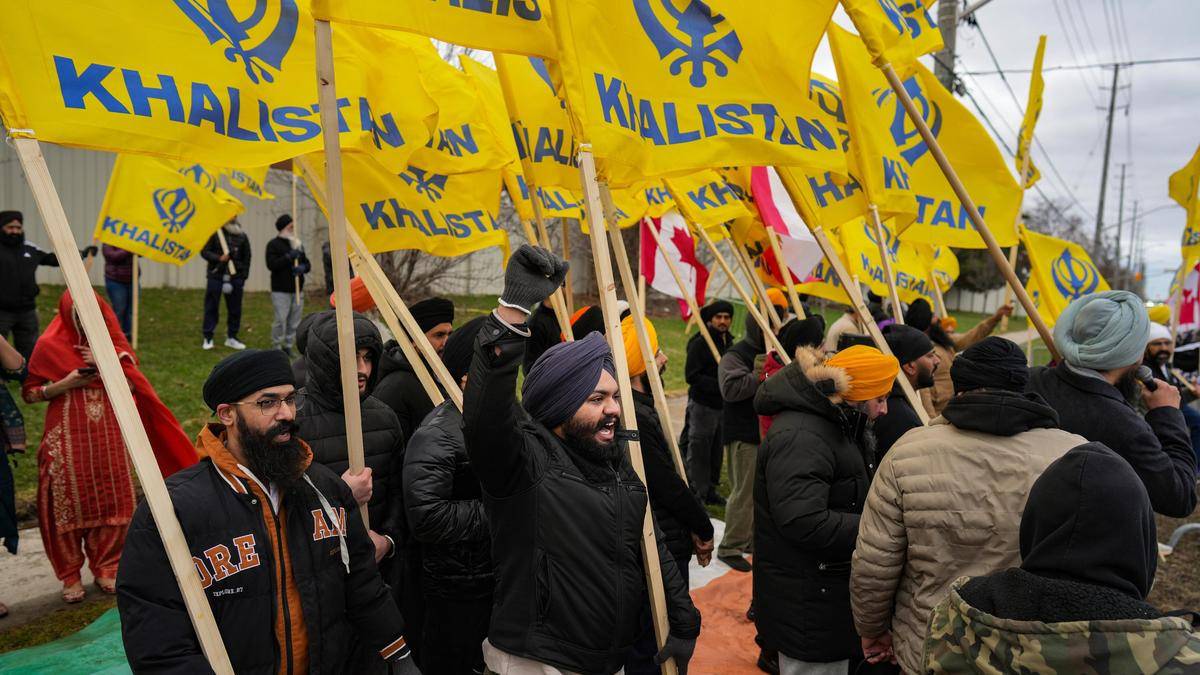
Whenever the issue of Khalistan comes up for discussion, the Sikh community is often associated with it. This tendency needs serious consideration. Khalistan is a separatist political ideology, whereas the Sikh community is a religious, cultural, and social community. Equating the two is not only factually incorrect but also harmful to the social unity of the country.
There can be no compromise when it comes to violence, terrorism, or any activity against India’s security, integrity, and sovereignty. Individuals or organizations that resort to violence, push young people toward extremism, or promote terrorist activities against India must face strict action under the law. However, such action must be based not on a person’s religion, but on their actions, ideology, and the evidence available against them.
This distinction is important because the identity of millions of Sikhs in India and around the world is not defined by any separatist ideology, but by their faith, hard work, spirit of service, and contribution to the nation. The tradition of the Sikh Gurus in Indian history has conveyed powerful messages of sacrifice, courage, humanity, and standing against injustice. The teachings of the Gurus are not confined to the Sikh community alone; their lives and sacrifices have influenced the collective consciousness of Indian society.
The manner in which Sikh Gurus are respected and revered across the country today carries an important social message in itself. Whether it is Guru Nanak Dev Ji’s message of humanity, equality, and service, or Guru Tegh Bahadur Ji’s supreme sacrifice for religious freedom and human values, these ideals form an important part of India’s shared cultural heritage.
The Central Government, under the leadership of Prime Minister Narendra Modi, has also given prominence in public life to the respect and remembrance of Sikh Gurus and Sikh heritage through various programs and initiatives over the years. The extensive celebrations marking the 550th birth anniversary of Guru Nanak Dev Ji, programs associated with the 400th birth anniversary of Guru Tegh Bahadur Ji, the observance of Veer Bal Diwas, and steps taken to facilitate pilgrims visiting gurdwaras and Sikh religious sites reflect the government’s emphasis in this direction.
The significance of these initiatives goes beyond government programs. When the wider Indian society remembers the sacrifices and teachings of the Sikh Gurus with respect, it sends a broader message that Sikh heritage is not the heritage of one community alone, but a shared heritage of India.
The observance of Veer Bal Diwas is particularly significant. Remembering the extraordinary courage and sacrifice of the Sahibzadas of Guru Gobind Singh Ji across the country is a symbol of the fact that Sikh history and its great sacrifices are an integral part of India’s collective consciousness. Similarly, the sacrifice of Guru Tegh Bahadur Ji stands as an extraordinary example of standing up for religious freedom and human rights.
For this very reason, viewing the entire Sikh community with suspicion because of the activities of certain separatist or violent elements is neither justified nor in the national interest. To attribute the views of a few individuals to an entire community would be a serious social mistake.
In a democracy, people have the right to disagree with ideas and to express their views peacefully. But when an ideology takes the form of violence, threats, or terrorism, it ceases to be merely a matter of political disagreement. At that point, the rule of law must prevail. The same principle must apply to the issue of Khalistan.
Unfortunately, social media has made this sensitive issue even more complicated. An inflammatory statement by an individual, a controversial post by an organization, or a video of an incident can quickly become associated with the image of an entire community. This can increase misunderstandings and create distrust toward ordinary Sikh citizens.
The responsibility of the media and political leadership is therefore even greater. “Sikh,” “Khalistan supporter,” “separatist,” and “violent extremist” are distinct terms with different meanings. Treating them as synonyms would be harmful to both journalism and democratic discourse.
India must strengthen its security policy against anti-India violent networks and extremist activities operating abroad. Wherever there is evidence of violence or terrorism being promoted against India, effective diplomatic and legal action should be pursued with the countries concerned. At the same time, both India’s policy and its public messaging must make one point absolutely clear: the fight is not against any religion or community, but against violence, terrorism, and violent separatist networks.