


AI Generated Summary
- Without strict market monitoring, legal crackdowns on counterfeiters, or clear consumer awareness campaigns, the GI tag remains a decorative stamp on paper rather than a lifeline for the women in Punjab’s villages.
- To an untrained eye, a machine-made dupatta looks passable, but it sells for a fraction of the price of an authentic piece.
- Why spend three months embroidering a masterpiece when a factory can pump out a hundred imitations in an afternoon, selling them to an indifferent market.
Walk into any busy market in Punjab today, and you will be greeted by a kaleidoscope of vibrant geometry—scarves, dupattas, and jackets adorned with intricate geometric patterns. At first glance, Phulkari seems to be thriving. But look closer, and the tragic irony of a centuries-old heritage unfolds. What you are seeing is rarely the soul-stirring handiwork of rural artisans; it is the swift, soulless output of modern embroidery machines.
Nearly two decades after Phulkari earned its prestigious Geographical Indication (GI) tag—a certification intended to safeguard its regional authenticity and protect local artisans—the craftspersons who keep this tradition alive are fighting a quiet, losing battle for survival.
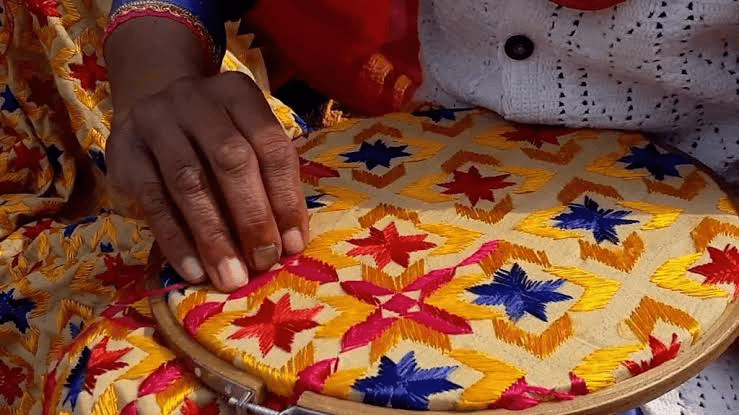
Phulkari, which literally translates to “flower work,” was never merely a commercial enterprise. Historically woven on coarse cotton (khaddar) using unspun silk threads (pat), it was an emotional canvas. Mothers embroidered dupattas for their daughters’ weddings; grandmothers stitched blessings into every motif. It required months of meticulous labor, patience, and deep cultural memory.
Today, that painstaking devotion is being undercut by mass production. Factories in industrial hubs flood the market with cheap, synthetic knockoffs that replicate traditional designs in minutes. To an untrained eye, a machine-made dupatta looks passable, but it sells for a fraction of the price of an authentic piece. Unwary tourists and budget-conscious buyers default to the cheaper alternative, leaving genuine artisans stranded with unsold inventory and empty pockets.
The GI tag was supposed to act as a shield against this very exploitation. In theory, legal protection ensures that only certified craftspersons from the designated region can market their work under the Phulkari name. In practice, enforcement remains virtually non-existent. Without strict market monitoring, legal crackdowns on counterfeiters, or clear consumer awareness campaigns, the GI tag remains a decorative stamp on paper rather than a lifeline for the women in Punjab’s villages.
As profit margins evaporate, the younger generation is predictably turning away from the art. Why spend three months embroidering a masterpiece when a factory can pump out a hundred imitations in an afternoon, selling them to an indifferent market?
Preserving Phulkari requires more than nostalgia; it demands structural action. We need rigorous enforcement of GI regulations, dedicated authentic marketplaces, and fair-trade pricing models that guarantee artisans a living wage. Consumers, too, must learn to value the story behind the stitch. If we continue to prioritize convenience over authenticity, we won’t just lose a handicraft—we will erase a vital thread of Punjab’s cultural identity.