


AI Generated Summary
- Scientists have described the emergence of the pest as a significant challenge for Punjab’s apiculture sector and stressed that timely monitoring and strict hygiene measures will be essential to limit its spread and protect the state’s honeybee population.
- Punjab’s thriving beekeeping sector has come under fresh pressure with scientists confirming the spread of the small hive beetle (SHB), an invasive pest that poses a serious risk to honeybee colonies, honey production and agricultural pollination.
- He cautioned against simply removing the beetles from the apiary, noting that the insects are capable of flying several kilometres and can quickly spread to neighbouring bee farms.
Punjab’s thriving beekeeping sector has come under fresh pressure with scientists confirming the spread of the small hive beetle (SHB), an invasive pest that poses a serious risk to honeybee colonies, honey production and agricultural pollination.
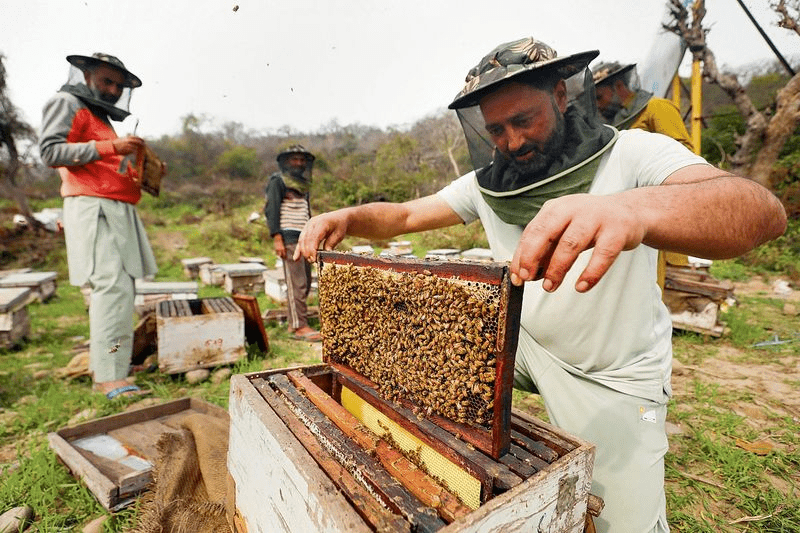
Researchers at Punjab Agricultural University (PAU) have detected the beetle in apiaries across different parts of the state during a recent field survey, raising concerns among scientists and beekeepers alike. The pest, which attacks bee colonies from within, is capable of causing extensive damage and, in severe cases, forcing colonies to collapse.
Punjab ranks among India’s leading honey-producing states, contributing around 21,100 tonnes of honey annually—approximately 14 per cent of the country’s total production of 1.5 lakh tonnes. Experts warn that a widespread infestation could not only reduce honey output but also affect crop yields, as honeybees play a crucial role in pollination.
According to PAU scientists, both the adult beetles and their larvae feed on honey, pollen, brood and combs inside the hive. The insects contaminate honey with their excreta, making it unsuitable for consumption. Female beetles lay clusters of small white eggs in hidden areas of the hive, such as the edges of frames and combs, after entering through cracks or hive entrances.
Once the eggs hatch, the larvae burrow through the combs while feeding on bee brood, pollen and stored honey. During this process, they introduce the yeast Kodamaea ohmeri, which causes the honey to ferment rapidly. Heavy infestations can weaken colonies to such an extent that bees abandon their hives altogether.
Dr Jaspal Singh, Principal Entomologist at PAU, urged beekeepers to conduct regular inspections of their colonies to detect infestations at an early stage. He advised separating beetles from bees by sweeping combs into an empty hive fitted with a 4–6 mm mesh. The collected beetles should then be destroyed either by burning or by immersing them in soapy water.
He cautioned against simply removing the beetles from the apiary, noting that the insects are capable of flying several kilometres and can quickly spread to neighbouring bee farms.
To manage the pest, Dr Bharti Mahindra, Senior Entomologist at PAU, recommended the use of beetle traps placed between hives. She suggested filling each trap with 25–30 ml of edible oil and around 5 ml of apple cider vinegar to attract and capture the beetles. Depending on the severity of infestation, two to four traps may be required for each colony.
In cases where larval infestation is extensive, Dr Mahindra advised destroying the affected hive after removing the combs. Severely damaged combs should be melted to recover wax, while larvae must not be discarded outside the apiary to prevent further spread. She also urged beekeepers to ensure that honeybee colonies being bought or sold are free from the small hive beetle and its larvae.
Scientists have described the emergence of the pest as a significant challenge for Punjab’s apiculture sector and stressed that timely monitoring and strict hygiene measures will be essential to limit its spread and protect the state’s honeybee population.