


AI Generated Summary
- India launched a sharp diplomatic attack on Pakistan at the United Nations Security Council, accusing Islamabad of institutionalising misinformation by branding militant groups operating within its own borders as “Fitna al Hindustan” and attempting to shift responsibility for domestic security failures onto New Delhi.
- Harish also criticised Pakistan’s political structure, arguing that recent constitutional developments reflected a growing concentration of power in the hands of the military at the expense of civilian institutions.
- The situation deteriorated further after Afghan authorities alleged that a Pakistani strike on a drug rehabilitation facility in Kabul caused hundreds of fatalities, an incident that intensified international concern over the conflict.
United Nations: India launched a sharp diplomatic attack on Pakistan at the United Nations Security Council, accusing Islamabad of institutionalising misinformation by branding militant groups operating within its own borders as “Fitna al Hindustan” and attempting to shift responsibility for domestic security failures onto New Delhi.
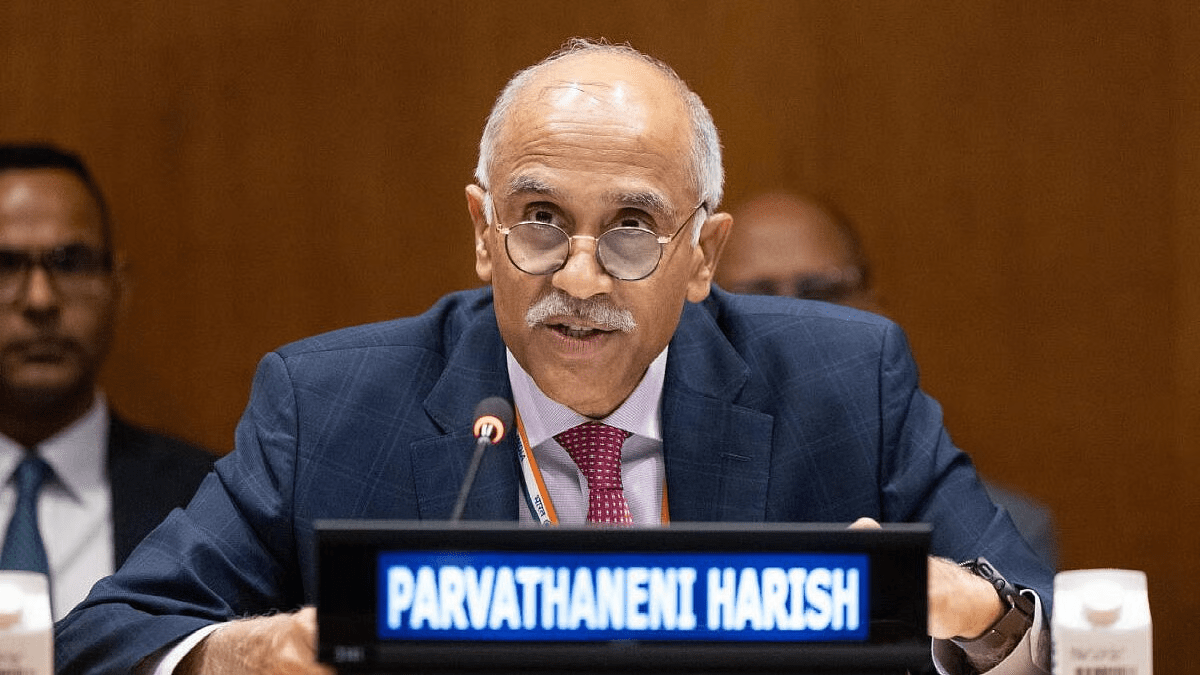
Addressing a Security Council discussion on Afghanistan, India’s Permanent Representative to the UN, Ambassador Parvathaneni Harish, dismissed Pakistan’s allegations that certain militant organisations were acting under Indian influence. He argued that Islamabad had failed to provide any credible evidence to support such claims and was instead promoting a politically motivated narrative.
“Official directives instructing state agencies to describe groups inside Pakistan as ‘Fitna al Hindustan’ amount to state-sponsored disinformation wrapped in religious terminology,” Harish said, contending that the terminology was designed to mislead both domestic audiences and the international community.
The Indian envoy maintained that the campaign was part of a broader effort by Pakistan’s establishment to cultivate hostility towards India while diverting attention from mounting internal challenges. He described the exercise as an “organised factory of hate” aimed at distracting citizens from pressing political and economic difficulties by projecting India as an external threat.
Harish also criticised Pakistan’s political structure, arguing that recent constitutional developments reflected a growing concentration of power in the hands of the military at the expense of civilian institutions. According to him, the increasing influence of the armed forces has become a defining feature of governance in the country.
Turning to regional security concerns, India condemned Pakistan’s military actions across the Afghan border and accused Islamabad of causing significant civilian suffering through aerial strikes inside Afghanistan. Harish argued that military operations resulting in civilian deaths could not be justified under the banner of counter-terrorism.
“Calling a massacre a military operation does not erase responsibility,” he said. “The killing and maiming of civilians, including women and children, cannot be defended as a security measure.”
He further accused Pakistan of displaying double standards by invoking international law and religious solidarity while conducting air operations during the holy month of Ramadan.
The exchange comes against the backdrop of worsening tensions between Pakistan and Afghanistan. United Nations reports earlier this year documented civilian casualties from Pakistani airstrikes inside Afghan territory, including women and children, triggering one of the most serious confrontations between the two neighbours in recent years.
According to UN assessments, cross-border strikes and subsequent military engagements had, by March, resulted in dozens of civilian deaths and injuries while displacing more than 100,000 people. The situation deteriorated further after Afghan authorities alleged that a Pakistani strike on a drug rehabilitation facility in Kabul caused hundreds of fatalities, an incident that intensified international concern over the conflict.
Although diplomatic efforts helped prevent a wider war and secured a temporary reduction in hostilities, sporadic clashes continue along the Pakistan-Afghanistan border, keeping the region on edge and adding urgency to international calls for restraint.
India’s intervention at the Security Council underscores New Delhi’s continued effort to challenge what it views as Pakistan’s attempts to externalise domestic problems while drawing global attention to the humanitarian consequences of ongoing regional instability.