


AI Generated Summary
- Carney’s Liberal government, elected in April 2025 on a platform of economic resilience against Donald Trump’s tariffs, has quietly walked back those claims, with officials noting no ongoing interference concerns.
- Canadian Prime Minister Mark Carney’s arrival in Mumbai today marks his first official trip to India, signaling a bold pivot from years of diplomatic frost to economic thaw.
- Carney lands in India’s financial hub for two days of CEO huddles, financial innovator meets, and chats with Canadian pension funds holding $100 billion in Indian assets.
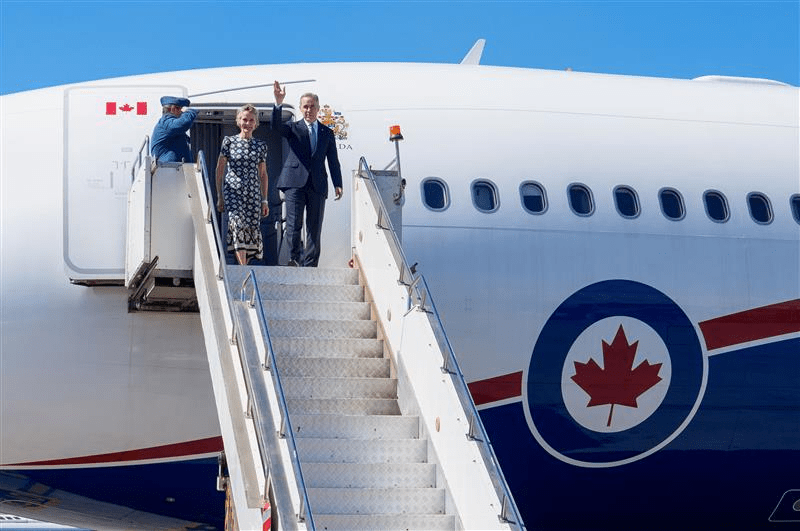
Canadian Prime Minister Mark Carney’s arrival in Mumbai today marks his first official trip to India, signaling a bold pivot from years of diplomatic frost to economic thaw. Amid global trade turbulence, this four-day visit from February 27 to March 2 underscores Canada’s urgent need to diversify beyond U.S. reliance, while offering India strategic partnerships in energy and tech.
India-Canada ties plummeted in 2023 under Justin Trudeau, triggered by unproven baseless allegations linking New Delhi to the killing of Khalistani separatist Hardeep Singh Nijjar, leading to diplomat expulsions and stalled trade talks. Carney’s Liberal government, elected in April 2025 on a platform of economic resilience against Donald Trump’s tariffs, has quietly walked back those claims, with officials noting no ongoing interference concerns. This reset gained momentum at the 2025 G20, where Carney and Narendra Modi agreed to revive ties, reappoint high commissioners, and target doubled bilateral trade.
Carney, the former Bank of England governor and unelected Liberal leader turned PM, brings financier savvy to diplomacy. His visit—invited by Modi—prioritizes “middle-power” alliances, reducing Canada’s U.S. dependence amid tariff wars and annexation rhetoric.
Carney lands in India’s financial hub for two days of CEO huddles, financial innovator meets, and chats with Canadian pension funds holding $100 billion in Indian assets. These engagements aim to unlock investments in infrastructure, logistics, and real estate, leveraging India’s status as the world’s fastest-growing major economy. Expect announcements on tech exchanges and AI collaboration, aligning Carney’s crisis-manager ethos with India’s digital ambitions.
On March 2, delegation-level discussions at Hyderabad House with Modi will review the Strategic Partnership, focusing on CEPA revival. Stalled since 2023, the Comprehensive Economic Partnership Agreement could slash tariffs, boost goods/services access, and propel $21 billion annual trade toward $50-70 billion by 2030. Uranium deals worth CAD 2.8 billion over a decade headline energy talks, fueling India’s nuclear push alongside LNG, heavy crude, and critical minerals for EVs.
Clean energy and defense tech loom large, with Canada eyeing India’s green transition and supply chain shifts. Immigration—touchy amid 2025 deportations of Indians—may see visa and student mobility tweaks, benefiting Canada’s 1.6 million Indian-origin residents.
For Canada, the trip counters Trump’s pressures, forging Indo-Pacific anchors before stops in Australia and Japan. India gains reliable energy imports and tech inflows without U.S.-style volatility. This pragmatic duo—Carney’s markets-first approach meets Modi’s self-reliance—could redefine G7-India dynamics.
Yet risks linger: Khalistan echoes or U.S. trade escalations could derail momentum. Still, as global hegemons clash, middle powers like these must collaborate—or risk the menu. Carney’s visit proves economics trumps ideology, heralding a new era of mutual gain.