


AI Generated Summary
- Larki Punjaban (2003), centered on a cross-border romance between a Pakistani Muslim man and an Indian Sikh woman, has been criticised for resting on the fantasy of Sikh women emotionally or spiritually gravitating toward Islam and Muslim Pakistan despite its late narrative “twist.
- Films such as Veryam (1981) are remembered for portraying a Sikh woman’s emotional movement toward a Muslim male lead in a manner that implicitly positions Islam and Muslim culture as superior and more desirable.
- This pattern is reinforced by stage and screen comedy, where caricatured “Sardar” figures, often performed with fake turbans and exaggerated mannerisms, are deployed for laughs, echoing the wider “Sardar joke” culture and reducing Sikhs to loud, naive, or buffoonish stereotypes rather than serious historical or political actors.
As India and its Punjab region continue to command global attention for rapid economic growth, institutional reform, and social progress, Pakistan’s Punjab remains mired in corruption, scandals, and chronic mismanagement. Rather than confront its domestic failures, the Pakistani state has increasingly leaned on anti-India narratives, mobilizing state-aligned media houses, social media influencers, YouTubers, and filmmakers to manufacture distraction and shape public opinion through cultural production.
This instrumentalization of cinema is not new. For decades, Pakistani films and television dramas have repeatedly depicted Sikh characters – particularly Sikh women – through a narrow and deeply contested lens. Several productions have relied on Islamization or “conversion romance” tropes that many Sikh commentators view as degrading and ideologically loaded. Films such as Veryam (1981) are remembered for portraying a Sikh woman’s emotional movement toward a Muslim male lead in a manner that implicitly positions Islam and Muslim culture as superior and more desirable. Larki Punjaban (2003), centered on a cross-border romance between a Pakistani Muslim man and an Indian Sikh woman, has been criticised for resting on the fantasy of Sikh women emotionally or spiritually gravitating toward Islam and Muslim Pakistan despite its late narrative “twist.” Similarly, Bilqees Kaur (2012) situates a Sikh-origin female character within a Muslim household, normalizing absorption into a Muslim identity rather than affirming Sikh identity with independent dignity.
Taken together, these storylines are widely seen by Sikhs as part of a broader civilizational hierarchy embedded in Pakistani popular culture, one that subordinates Sikh agency, particularly that of women, to narratives favoring Islam and Pakistani nationalism. This pattern is reinforced by stage and screen comedy, where caricatured “Sardar” figures, often performed with fake turbans and exaggerated mannerisms, are deployed for laughs, echoing the wider “Sardar joke” culture and reducing Sikhs to loud, naive, or buffoonish stereotypes rather than serious historical or political actors.
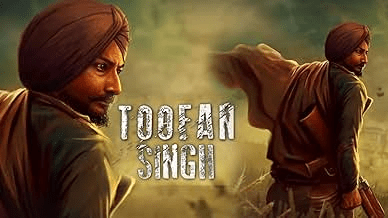
It is within this longer tradition of cultural appropriation and distortion that the latest and most high-profile example must be situated: Encounter, a film currently being produced in Pakistan by UK-based Sikh filmmaker Dilbagh Singh, best known for his 2017 release Toofan Singh. The film, as learnt from credible sources, dramatizes alleged extrajudicial encounters and enforced disappearances of Sikhs by the Punjab Police during the 1980s, at the height of the Khalistan insurgency. Singh’s earlier work similarly foregrounded state abuses while portraying separatist figures in a sympathetic light, claiming that over 90 percent of the narrative was based on documented events and media reports.
Singh has since become a regular presence within Pakistan’s cultural ecosystem, appearing as a speaker, researcher, and producer. In April 2025, he visited the School of Creative Arts at the University of Lahore to discuss reviving Pakistani cinema and promoting Punjabi-language films. Reports also indicate that he has received research support from the Punjab Film Department Authority for strategies aimed at rejuvenating the local film industry.
Sources confirm that Singh has traveled to Pakistan to shoot select scenes for Encounter, while most of the filming continues in the United Kingdom. Scenes initially planned for India are now being shot in Nankana Sahib, Sheikhupura, and Narowal, with elaborate sets recreating an Indian village and a Tarn Taran police station constructed in and around these locations. Local actors, including Shahbaaz Builder, have been cast in supporting roles, while lead roles are assigned to relatively unknown faces, reportedly a deliberate decision to avoid star power overshadowing the film’s message and to shield established actors from association with a politically sensitive project.

Multiple reports suggest that the film enjoys institutional backing from Pakistan’s Inter-Services Intelligence (ISI), which is alleged to be overseeing aspects of the script, locations, and direction to ensure alignment with state messaging. Critics argue that Singh’s work consistently portrays India through a selectively critical lens, emphasizing minority rights violations and policing excesses while downplaying the violent and extremist dimensions of the Khalistan movement. With logistics and security reportedly facilitated by state agencies, observers contend that Encounter functions less as independent art and more as a coordinated soft-power initiative aimed at shaping global perceptions of India.
The decision to film at sacred Sikh sites, most notably Nankana Sahib, the birthplace of Guru Nanak Dev Ji, has provoked especially sharp condemnation. Sikh religious authorities have denounced the move as beadbi (sacrilege), stressing that gurdwaras exist solely for spiritual practice, seva, and devotion to the Guru Granth Sahib Ji. Using these spaces for commercial filmmaking or political messaging is widely viewed as a violation of core religious principles.
For many Sikhs, the controversy cuts deeper than geopolitics. It raises uncomfortable questions about complicity—about how a small number of individuals, motivated by funding, visibility, or institutional patronage, appear willing to compromise religious sanctity and community dignity. In this reading, Encounter is not merely a propaganda exercise by the Pakistani state, but also a cautionary example of how faith, memory, and trauma can be commodified when personal gain is placed above collective responsibility.
Through projects like Encounter, Pakistan appears to be extending its propaganda machinery further into the cultural sphere, using cinema to reinforce anti-India narratives while exploiting religious symbolism for political ends. Critics warn that such strategies erode the sanctity of sacred spaces, normalize the politicization of heritage, and reduce art and religion to instruments of state power—at a cost borne not by governments, but by the communities whose identities are repeatedly appropriated and distorted.