


AI Generated Summary
- In November 2024, a similar confrontation at the same Mandir produced violence and three arrests during a consular camp for seniors.
- It is a recurring nuisance that damages the reputation of the broader Sikh community in Canada.
- Court orders and buffer zones around temples in Surrey and elsewhere exist precisely because past gatherings linked to Sikhs for Justice and related groups have involved intimidation, clashes, and vandalism.
This is a reader submission
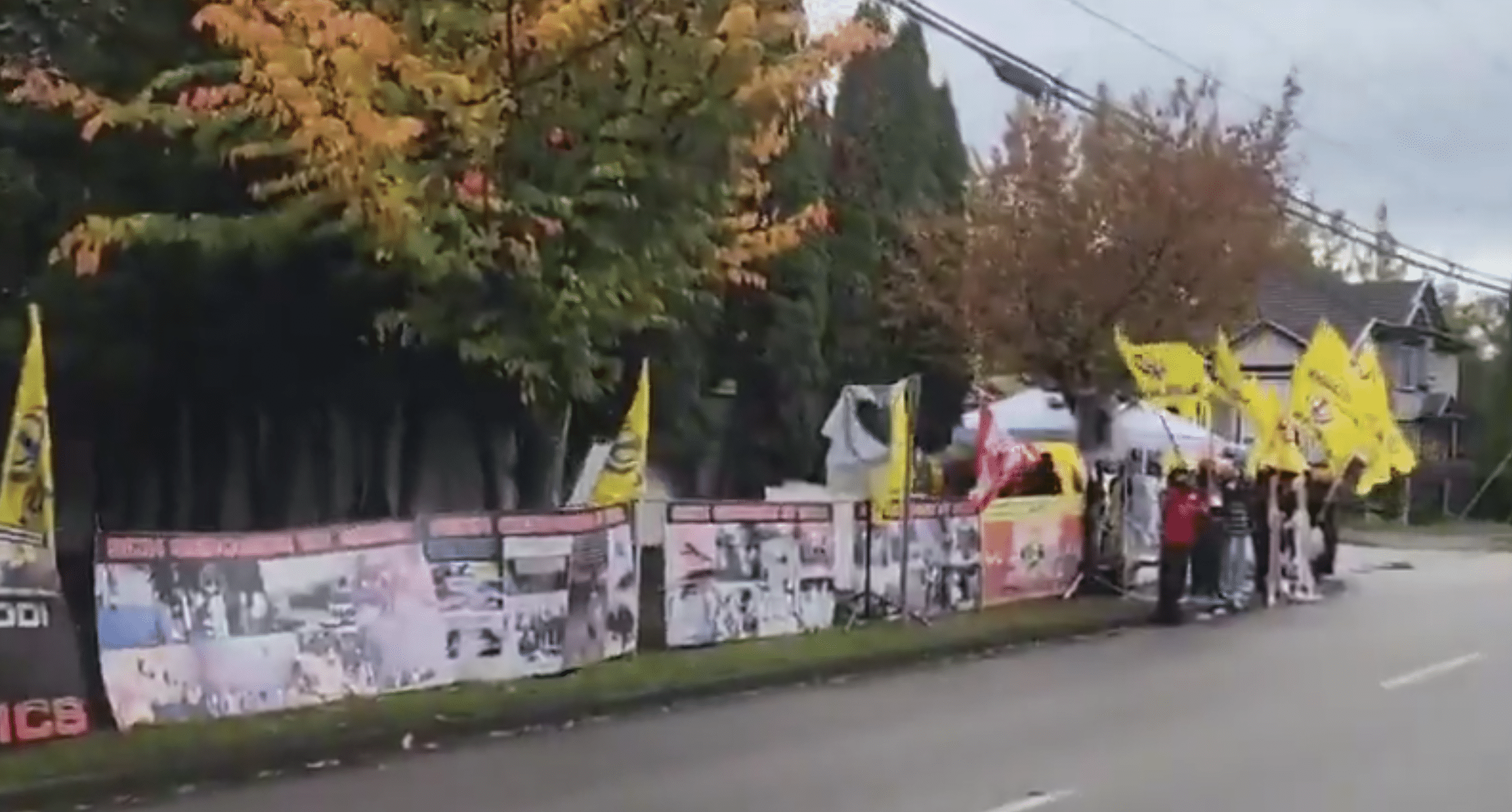
Surrey police did what any responsible force must do: they restored order outside the Lakshmi Narayan Mandir after a Khalistani protest turned disorderly. Arrests were made amid the usual yellow flags, and the crowd dispersed. The protesters continued to demand justice for Hardeep Singh Nijjar’s “killer” while denying any connection to criminal gangs. That combination of disruption and denial is not political advocacy. It is a recurring nuisance that damages the reputation of the broader Sikh community in Canada.
Nijjar’s 2023 killing outside a Surrey gurdwara was a crime. Four men face murder charges in Canadian courts. Separately, a U.S. federal indictment unsealed in 2026 as part of Operation Hard Ball alleges that Lawrence Bishnoi and his North American lieutenant, Satinderjeet Singh (Goldy Brar), ordered the assassination. The FBI has placed Brar on its Ten Most Wanted list with a $1 million reward. RCMP officials involved in the joint probe have stated there is no evidence linking Indian government officials to the organized-crime charges. In leaked audio, Brar is heard claiming responsibility and citing alleged drug-related grievances. Canadian authorities have not authenticated the recording, but the formal U.S. charges exist. The protesters’ refusal to engage any of this while insisting the only possible culprit is India is selective blindness, not principle.
What makes these actions a particular nuisance is the location and the pattern. Protests repeatedly target Hindu temples and Indian consular events rather than confining themselves to gurdwaras or open public spaces. In November 2024, a similar confrontation at the same Mandir produced violence and three arrests during a consular camp for seniors. Court orders and buffer zones around temples in Surrey and elsewhere exist precisely because past gatherings linked to Sikhs for Justice and related groups have involved intimidation, clashes, and vandalism. Targeting a place of worship of another faith under the banner of Sikh sovereignty does not advance any legitimate grievance. It imports conflict into Canadian neighbourhoods and paints ordinary Sikhs with the same brush.
Most Canadian Sikhs are not part of this network. They run businesses, raise families, serve in police and public institutions, and contribute to the country that gave them opportunity. Extremists who wave yellow flags outside mandirs, deny documented criminal links, and treat every police intervention as oppression undermine that record. They generate negative headlines, invite scrutiny of the entire community, and provide ammunition to those who already view Sikh institutions with suspicion. Extortion cases, gang activity, and temple vandalism in the Lower Mainland have already created anxiety; adding politicized disorder outside Hindu places of worship compounds it.
Peaceful expression is protected. Disorder, intimidation of worshippers, and refusal to confront evidence are not. When police end such protests and restore order, they protect the right of every community—including Sikhs—to live without imported street theatre. The Khalistani network’s insistence on treating gang indictments and court charges as irrelevant propaganda does not strengthen the case for accountability. It weakens the credibility of anyone who continues to associate with it.
Canadian Sikhs have every reason to demand facts and fair process in the Nijjar case. They have no reason to tolerate a fringe that turns that demand into a recurring nuisance against their neighbours. Order outside the Mandir was restored. The larger task is for the community to make clear that this behaviour does not represent it.
Manpreet Singh Sandhu
Surrey, BC
27 October, 2026