


AI Generated Summary
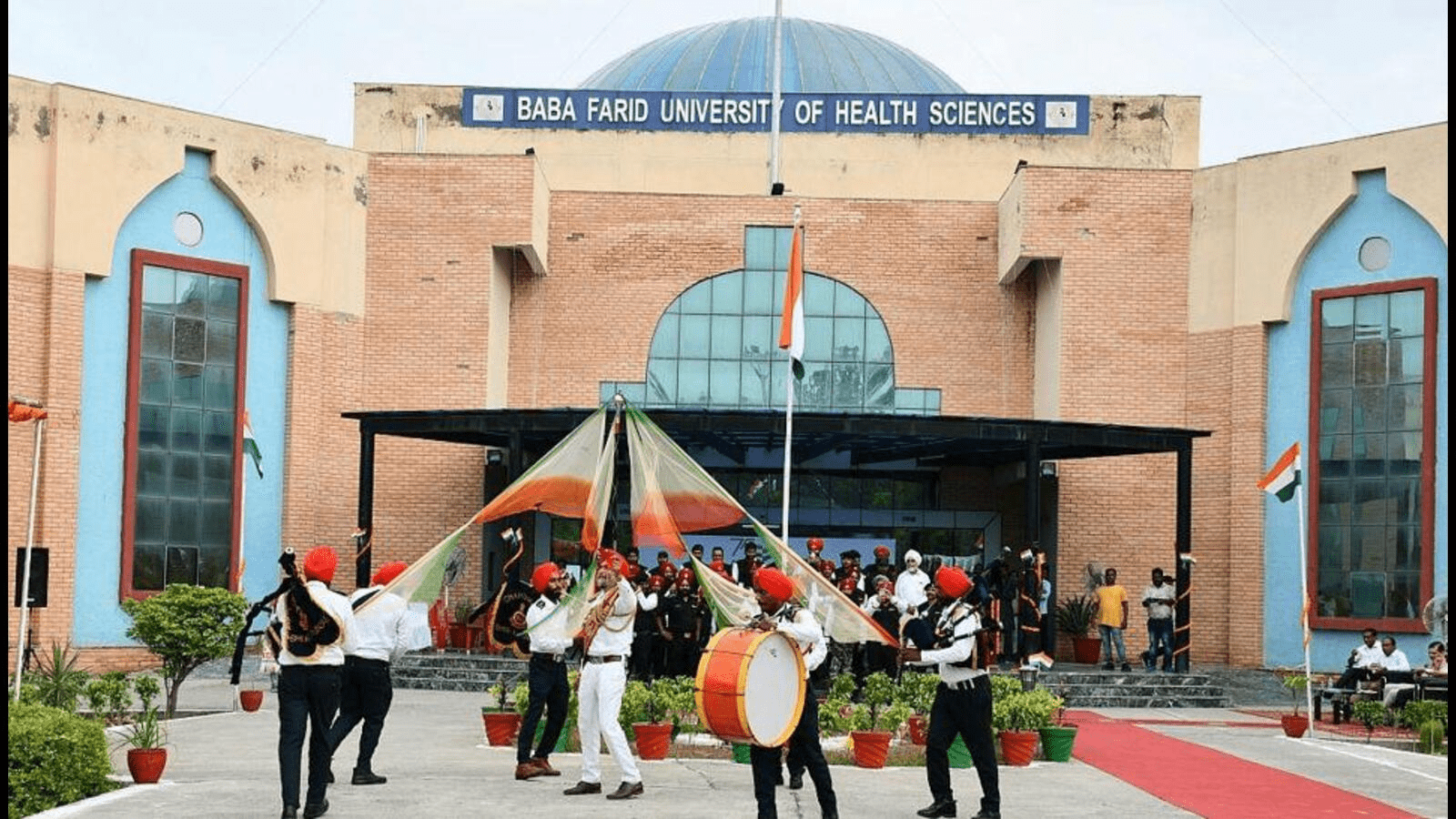
- In a significant overhaul of healthcare education governance in Punjab, Baba Farid University of Health Sciences (BFUHS) has been appointed as the primary regulatory authority for all pharmacy and allied health science courses across the state.
- The decision, implemented through an order issued by the Director of Technical Education and Industrial Training, shifts responsibilities previously handled by the Department of Technical Education and Industrial Training to the Faridkot-based health sciences university.
- Meanwhile, the university is continuing to expand its nursing education network, with several government nursing colleges already functional and additional campuses under development, signalling a broader push to address workforce needs in the state’s healthcare sector.
In a significant overhaul of healthcare education governance in Punjab, Baba Farid University of Health Sciences (BFUHS) has been appointed as the primary regulatory authority for all pharmacy and allied health science courses across the state. The decision, implemented through an order issued by the Director of Technical Education and Industrial Training, shifts responsibilities previously handled by the Department of Technical Education and Industrial Training to the Faridkot-based health sciences university.
With immediate effect, academic and administrative control of health-related programmes that were earlier overseen by IKG Punjab Technical University and Maharaja Ranjit Singh Punjab Technical University, Bathinda, will now come under BFUHS. Officials believe the move will streamline oversight and align professional health education with specialised medical training standards.
BFUHS Vice-Chancellor Dr Rajiv Sood described the transition as a statutory correction, noting that the university’s governing framework already designates it as the authority for health sciences education. He said the consolidation is expected to strengthen academic monitoring, enhance curriculum quality, and improve outcomes for students enrolled in pharmacy, paramedical, and healthcare courses.
According to Dr Sood, the university has been preparing for expanded responsibilities through a series of institutional upgrades. These include modernised infrastructure, recruitment of qualified teaching and medical staff, and the expansion of super-specialty services within teaching hospitals. Long-pending vacancies have also been filled, a move officials say has improved the institution’s capacity to attract experienced professionals.
In a parallel development, the Punjab Government has entrusted BFUHS with the management of four government-run health facilities — Civil Hospital, Badal (Muktsar); Civil Hospital, Sri Khadur Sahib in Tarn Taran district; Community Health Centre, Jalalabad; and the Tertiary Cancer Care Centre in Fazilka district. The university will supervise administrative operations, infrastructure management, and the use of these facilities for academic and clinical training, while ensuring uninterrupted healthcare services for local communities.
The new arrangement also authorises BFUHS to recruit healthcare personnel directly to strengthen service delivery and expand specialised treatment options. Officials say integrating medical education with real-world clinical exposure at these institutions is expected to create a stronger training environment for future healthcare professionals.
Meanwhile, the university is continuing to expand its nursing education network, with several government nursing colleges already functional and additional campuses under development, signalling a broader push to address workforce needs in the state’s healthcare sector.