


AI Generated Summary
- Lauhuka may be small on the map, but in the chapters of history, it stands as a remarkable testament to bravery, service, and cultural legacy—proof that true greatness is not measured in size, but in sacrifice and spirit.
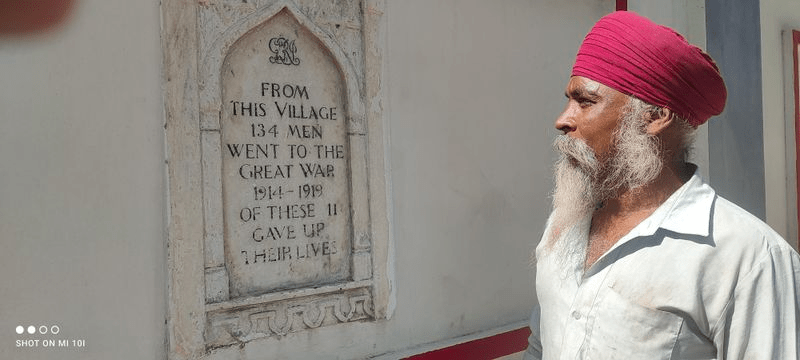
- Their names, memories, and spirit are preserved on a commemorative stone installed on the boundary wall of the Government Elementary School—a village landmark that has become both a history lesson and a symbol of pride.
- The community also produced participants in significant Sikh agitations, including the events at Saka Nankana Sahib and the Morchas at Babbar Akali and Gangsar Jaito.
Lauhuka, a village rooted in quiet fields and familiar pathways, stands tall in history for reasons far beyond its modest geography. Its people have repeatedly stepped forward in moments of national struggle, leaving behind a legacy of sacrifice, patriotism, and cultural contribution that continues to resonate across Punjab.
The story begins more than a century ago, when 134 men from Lauhuka enlisted during the First World War (1914–1919). Eleven never returned home. Their names, memories, and spirit are preserved on a commemorative stone installed on the boundary wall of the Government Elementary School—a village landmark that has become both a history lesson and a symbol of pride. Among these martyrs was Subedar Saudagar Singh, son of Gurdit Singh, who laid down his life on December 21, 1914.
Lauhuka’s involvement in national movements did not stop at the Great War. Villagers fought shoulder to shoulder in India’s struggle for freedom, with two losing their lives during the Ghadar movement and another during the tragedy at Jallianwala Bagh. The community also produced participants in significant Sikh agitations, including the events at Saka Nankana Sahib and the Morchas at Babbar Akali and Gangsar Jaito.
The village has not only been home to martyrs but also to religious and cultural stalwarts. Harnam Singh Jakhmi, a distinguished figure in Sikh devotional music, served as Hajuri Ragi at Gurdwara Dukh Nivaran Sahib in Patiala. His family, too, went on to shape public life: his elder daughter, Manjit Kaur, was married to former Union Minister Buta Singh, while his younger daughter, Darshan Kaur, served the state as Director of Public Instruction before retiring.
Lauhuka’s contribution to Punjab’s artistic heritage is no less significant. Amrik Singh Pannun, one of its celebrated sons, gave voice to the region’s spirit through hundreds of compositions later performed by renowned artists.
Today, the village’s dusty lanes and quiet courtyards carry whispers of stories that span colonial battlefields, freedom marches, sacred shrines, and musical stages. Lauhuka may be small on the map, but in the chapters of history, it stands as a remarkable testament to bravery, service, and cultural legacy—proof that true greatness is not measured in size, but in sacrifice and spirit.