


AI Generated Summary
- From the farms of Punjab to the boardrooms of Washington, his story is a testament to the power of perseverance and the global reach of Sikh ethos.
- In 2023, he became the 14th President of the World Bank, the first person of Indian origin to hold the position, and was honored with India’s Padma Shri award in 2016 for his contributions to trade and commerce.
- Stephen’s College in Delhi and the Indian Institute of Management Ahmedabad, he began his career in India with companies like Nestlé and PepsiCo before making his mark in the U.
In a momentous development that resonates deeply, Ajay Banga, the Indian-American President of the World Bank Group, has been appointed to the newly formed “Board of Peace” under U.S. President Donald Trump’s comprehensive plan to end the Gaza conflict.
Announced by the White House on January 16, 2026, this high-level executive board is tasked with overseeing the temporary governance, reconstruction, and stabilization of Gaza in the post-conflict phase. As one of seven distinguished members, Banga’s inclusion highlights his global stature in finance and development, while also serving as a beacon of achievement for Sikhs worldwide.
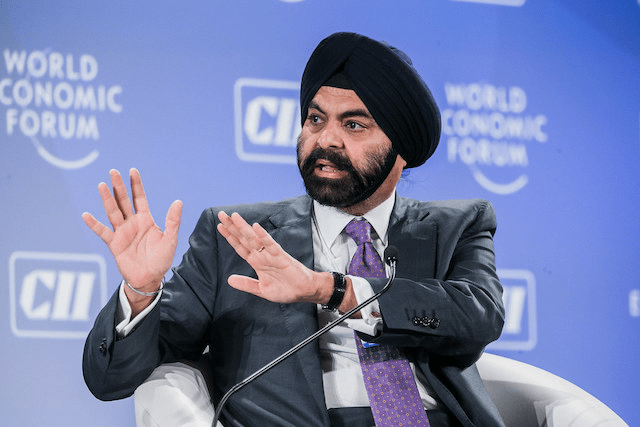
Born Ajaypal Singh Banga on November 10, 1959, in Khadki, Pune (then part of Bombay State), to a Punjabi Sikh Saini family hailing from Jalandhar, Punjab, Banga’s journey embodies the Sikh values of hard work, service, and resilience. His father, Lieutenant-General Harbhajan Singh Banga, was a decorated officer in the Indian Army, instilling in him a sense of discipline and global perspective from an early age. Banga proudly maintains his Sikh identity, often seen wearing a turban as a symbol of his faith, even as he navigates the corridors of international power. Educated at St. Stephen’s College in Delhi and the Indian Institute of Management Ahmedabad, he began his career in India with companies like Nestlé and PepsiCo before making his mark in the U.S. with Citigroup and eventually serving as CEO of Mastercard from 2010 to 2020. In 2023, he became the 14th President of the World Bank, the first person of Indian origin to hold the position, and was honored with India’s Padma Shri award in 2016 for his contributions to trade and commerce.
The “Board of Peace,” chaired by President Trump himself, includes notable figures such as Secretary of State Marco Rubio, Trump’s son-in-law Jared Kushner, former UK Prime Minister Tony Blair, Apollo Global Management CEO Marc Rowan, U.S. Special Envoy to the Middle East Steve Witkoff, and U.S. Deputy National Security Advisor Robert Gabriel. This executive body will guide Phase Two of Trump’s 20-point roadmap for Gaza, focusing on areas like governance capacity-building, regional relations, infrastructure reconstruction, investment attraction, and large-scale funding mobilization. Banga’s expertise in global finance and economic development makes him an ideal fit for mobilizing capital and driving sustainable reconstruction efforts in a region devastated by conflict.
For the Sikh and Punjabi diaspora, Banga’s appointment is more than a professional milestone—it’s a profound symbol of representation and empowerment. Punjab, the heartland of Sikhism, has long produced leaders who excel on the world stage, from military heroes to business tycoons. Banga’s role in this peace initiative underscores how Sikh principles, rooted in Guru Nanak’s teachings of equality, justice, and selfless service (seva), can contribute to global peacebuilding. As an Indian-origin Sikh, his presence on the board amplifies the voice of South Asian communities in international diplomacy, potentially opening doors for greater involvement in conflict resolution and economic aid programs. It also inspires young Punjabis to pursue careers in global institutions, proving that cultural heritage and professional excellence can coexist harmoniously.
The significance of this selection extends beyond personal achievement. In a time when global conflicts demand innovative solutions, Banga’s involvement could help ensure that Gaza’s redevelopment prioritizes inclusive growth, poverty alleviation, and long-term stability—aligning with the World Bank’s mission to end extreme poverty and promote shared prosperity. Critics of the plan, including some Palestinian officials, have raised concerns about external governance, but supporters argue that the board’s diverse expertise will foster a neutral, technocratic approach to rebuilding.
As Punjab celebrates one of its own stepping into this pivotal role, Ajay Banga’s appointment reminds us of the enduring impact of Sikh contributions to humanity. From the farms of Punjab to the boardrooms of Washington, his story is a testament to the power of perseverance and the global reach of Sikh ethos. This development not only elevates Banga’s legacy but also shines a spotlight on the potential for Punjabi Sikhs to shape a more peaceful world.