


AI Generated Summary
- As India strengthens its position in the international economic landscape, Trump's invocation of its growth rate reflects how the country's performance is increasingly becoming part of conversations about global competitiveness and economic policymaking.
- India's strong economic growth has found a prominent mention in American political discourse, with US President Donald Trump highlighting the country's 7 per cent GDP expansion while criticising the Federal Reserve's interest rate policies.
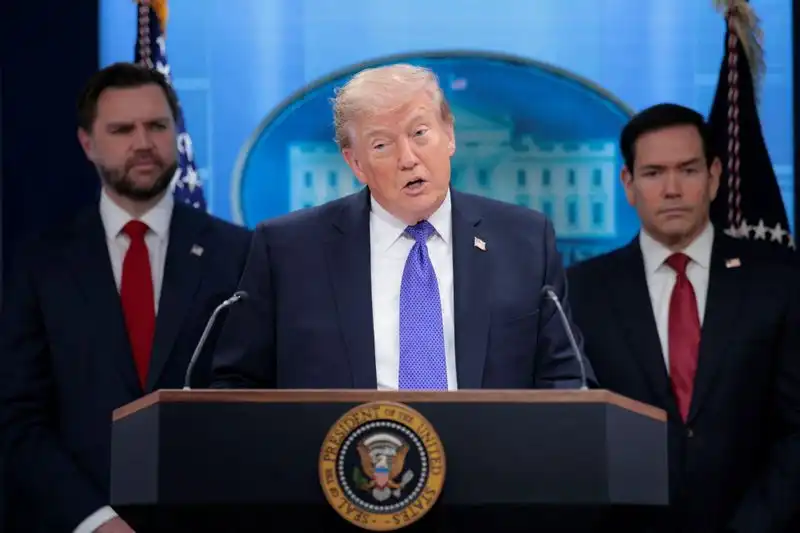
- Speaking at a White House press conference on Friday, November 20, Trump pointed to India's economic performance as an example of how favourable borrowing conditions could support growth.
India's strong economic growth has found a prominent mention in American political discourse, with US President Donald Trump highlighting the country's 7 per cent GDP expansion while criticising the Federal Reserve's interest rate policies.
Speaking at a White House press conference on Friday, November 20, Trump pointed to India's economic performance as an example of how favourable borrowing conditions could support growth. His remarks placed India's economic momentum at the centre of a debate over US monetary policy.
"If you look at India, they have low interest rates, and they have a 7 per cent GDP," Trump said, contrasting the Indian economy with the United States.
The American President argued that the US could achieve significantly higher growth if its central bank reduced borrowing costs. He suggested that American GDP growth could potentially reach 15 to 20 per cent, although such figures represented his own projections rather than established economic forecasts.
Trump also accused the Federal Reserve of being politically influenced, claiming that interest rates remained unnecessarily high despite positive economic indicators.
For India, the comparison marks a notable moment of international recognition, with the world's largest economy looking towards India's growth performance during a discussion about its own economic prospects.
India has remained among the fastest-growing major economies, supported by domestic economic activity and its expanding presence in global markets. Its growth trajectory has attracted international attention as major economies navigate inflationary pressures, uncertain trade conditions and changing monetary policies.
Trump's reference is particularly significant because India was presented as a positive economic comparison rather than merely as an emerging market. The remarks underscore the growing visibility of Indian economic performance in global policy discussions.
However, differences between the two economies remain substantial. Interest rate decisions depend on inflation, employment conditions, financial stability and other domestic factors. Lower borrowing costs alone do not guarantee faster economic growth.
The Federal Reserve continues to face inflationary pressures, with US annual personal consumption expenditures inflation reportedly reaching 3.6 per cent in September, above its 2 per cent target.
Nevertheless, the White House remarks have brought renewed attention to India's economic trajectory.
As India strengthens its position in the international economic landscape, Trump's invocation of its growth rate reflects how the country's performance is increasingly becoming part of conversations about global competitiveness and economic policymaking.
The comparison also reinforces India's rising profile as a major economy whose growth figures command attention beyond its borders.