


AI Generated Summary
- With the first batch of officers receiving their degrees, the programme establishes a new model for combining professional military training with recognised higher education, potentially paving the way for similar academic collaborations across other specialised branches of the armed forces.
- In a major development in military education and technological advancement, the Indian Institute of Technology (IIT) Ropar has awarded the country’s first Master of Technology (M.
- In a significant step towards strengthening military technical expertise, Army officers completing the Tank Technology Course have become the first recipients of the specialised postgraduate qualification.
In a significant step towards strengthening military technical expertise, Army officers completing the Tank Technology Course have become the first recipients of the specialised postgraduate qualification.
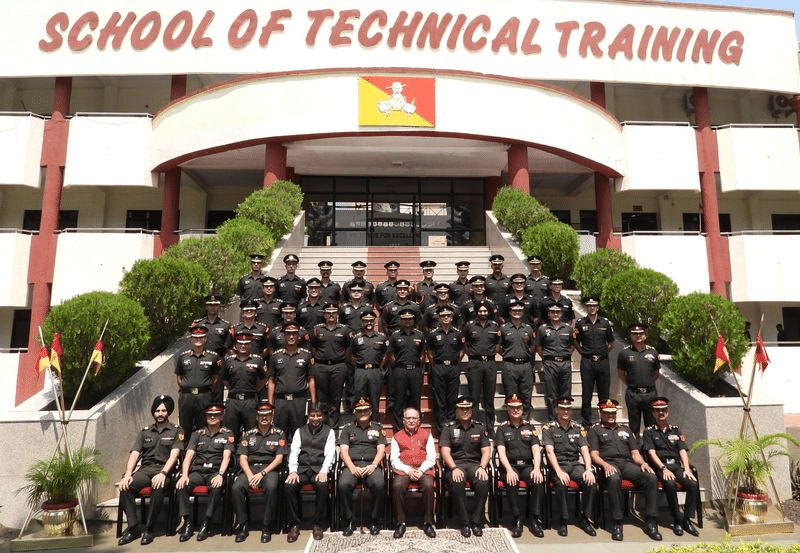
In a major development in military education and technological advancement, the Indian Institute of Technology (IIT) Ropar has awarded the country’s first Master of Technology (M.Tech) degrees in Defence Technology to Indian Army officers who successfully completed the Tank Technology Course.
The programme marks a new chapter in collaboration between the armed forces and academic institutions, bringing together specialised military training and advanced engineering education.
The Tank Technology Course is conducted at the Armoured Corps Centre and School in Ahilyanagar, Maharashtra. It provides officers with extensive technical knowledge of armoured fighting vehicles, including their automotive systems, weaponry, mechanical components and maintenance requirements.
The introduction of a postgraduate qualification adds an academic dimension to the Army’s existing technical training framework. Besides strengthening professional capabilities during military service, the degree is expected to open additional career opportunities for officers transitioning to civilian employment after retirement.
According to the Army Training Command, the initiative reflects the military’s emphasis on technological competence, professional development and closer cooperation with leading educational institutions.
IIT Ropar is the first institution in India to introduce an M.Tech programme in Defence Technology in collaboration with the Indian Army. The initiative combines academic research and engineering innovation with the practical experience gained by military personnel in operational environments.
The programme assumes particular importance given the scale and complexity of India’s armoured vehicle fleet. The Indian Army operates a substantial inventory of tanks and infantry combat vehicles that must remain operational across challenging geographical and climatic conditions, ranging from desert regions to mountainous terrain.
Maintaining these platforms requires specialised knowledge of propulsion systems, firepower, vehicle mechanics, repairs, overhauling and technological upgrades. As armoured warfare becomes increasingly dependent on sophisticated systems, the demand for personnel capable of understanding and managing advanced military technology continues to grow.
A significant proportion of the Army’s armoured inventory consists of Russian-origin platforms, including the T-90 and T-72 main battle tanks and BMP-series infantry combat vehicles. Their continued operation requires regular maintenance, modernisation and technical support.
At the same time, India is pursuing indigenous armoured vehicle development programmes to reduce dependence on foreign military equipment. These include the Zorawar light tank and proposed next-generation armoured combat platforms. The Arjun main battle tank programme has also been part of the country’s efforts to develop domestic capabilities, although it has faced challenges in meeting broader operational expectations.
Against this backdrop, the partnership between IIT Ropar and the Indian Army represents an effort to build a stronger domestic knowledge base in defence engineering. By exposing serving officers to advanced academic research and applied technological concepts, the initiative could contribute to more effective maintenance, innovation and future modernisation of military equipment.
The collaboration also highlights the growing importance of integrating academic institutions into India’s defence ecosystem. Such partnerships can help bridge the gap between laboratory research and battlefield requirements while supporting the country’s wider objective of achieving greater self-reliance in defence technology.
With the first batch of officers receiving their degrees, the programme establishes a new model for combining professional military training with recognised higher education, potentially paving the way for similar academic collaborations across other specialised branches of the armed forces.