


AI Generated Summary
- A driver who can approach a stranger in a public lot, assault her, and pursue her when she seeks safety raises basic questions about screening, real-time accountability, and how long it takes for complaints to produce arrests.
- A woman standing in a public parking lot at the Burlington GO Station on a June afternoon should not have to fear for her safety.
- It is advanced by accurate reporting, consistent enforcement, and a refusal to let ideology override the simple demand that women be able to stand in a parking lot without being attacked.
A woman standing in a public parking lot at the Burlington GO Station on a June afternoon should not have to fear for her safety. On June 16, 2026, at around 5:15 p.m., she was approached by a man who initiated a conversation and then sexually assaulted her. When she fled to a nearby business, he followed and assaulted her a second time. She escaped without physical injuries, but the violation remains.
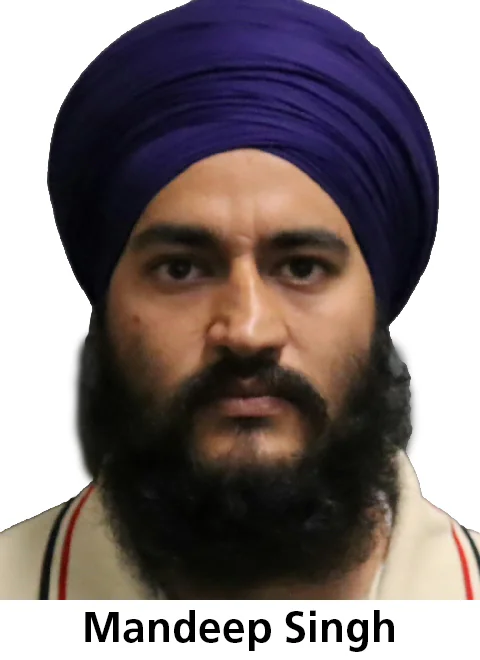
Halton Regional Police charged Mandeep Singh, 25, of Etobicoke, with two counts of sexual assault. At the time, he worked as an Uber driver. Investigators released his photograph because they believe there may be additional victims and urged anyone with information to come forward. He was arrested on July 26 and held pending a bail hearing in Milton.
The official record is straightforward. The circulating graphic that labels him a “prominent Khalistani figure” and “Big Khalistani Leader,” ages him at 32, and frames the story as political drama is not. Police releases and mainstream Canadian coverage describe a rideshare driver facing criminal charges. Social media has layered on unverified claims of extremist affiliations and gurdwara links. Those claims remain unconfirmed by authorities. Treating an unproven political identity as the central fact risks turning a serious crime into partisan ammunition and distracts from the victim and the failures that enabled the alleged attacks.
This case is not isolated in its pattern. Rideshare platforms place strangers in private vehicles or close proximity under the banner of convenience and trust. Background checks exist, yet gaps persist. A driver who can approach a stranger in a public lot, assault her, and pursue her when she seeks safety raises basic questions about screening, real-time accountability, and how long it takes for complaints to produce arrests. More than a month passed between the incidents and the charges. That delay matters when public safety is at stake.
Canada’s broader conversation about immigration, community standards, and crime often collapses into caricature. Some voices immediately reach for ethnic or political scapegoats; others treat any discussion of patterns as forbidden. Neither helps. Sexual assault is a crime of power and opportunity. When it occurs in broad daylight near transit infrastructure used by ordinary people, the priority is clear: protect potential victims, investigate thoroughly, prosecute without fear or favour, and examine whether commercial platforms are doing enough to keep predators off their networks.
The victim in Burlington did what she could. She left and sought help. Police eventually identified and charged the suspect. That process must continue without distraction. If other victims exist, they deserve the same seriousness. If Uber’s systems failed to flag risk, those systems require scrutiny. If political or community networks are later shown to have shielded anyone, that evidence should be pursued on its merits—not asserted through edited graphics.
Public safety is not advanced by inflating an individual’s profile beyond the facts or by refusing to discuss crime when it is inconvenient. It is advanced by accurate reporting, consistent enforcement, and a refusal to let ideology override the simple demand that women be able to stand in a parking lot without being attacked. The charges against Mandeep Singh should be tested in court. The systems that allowed the alleged assaults should be tested in public. Anything less fails the victim and the public that expects better.